Does no added sugar squash break a fast?
no added sugar does not mean sugar-free or energy-free
On this page
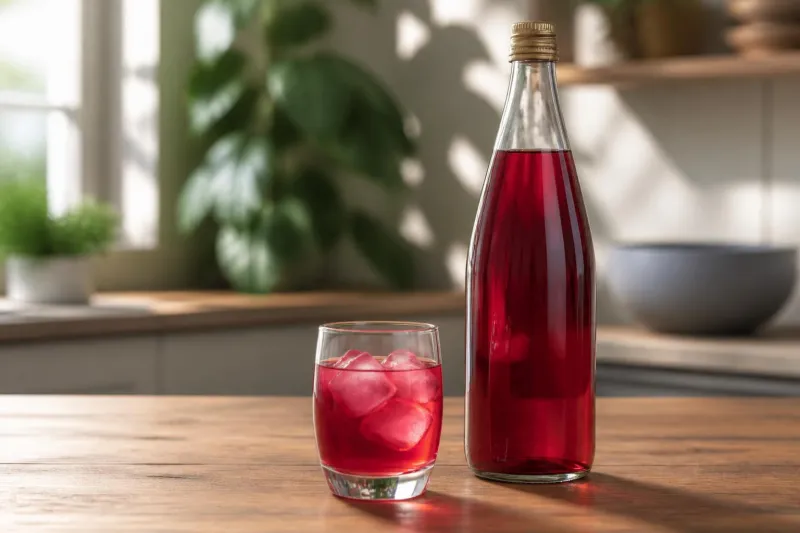
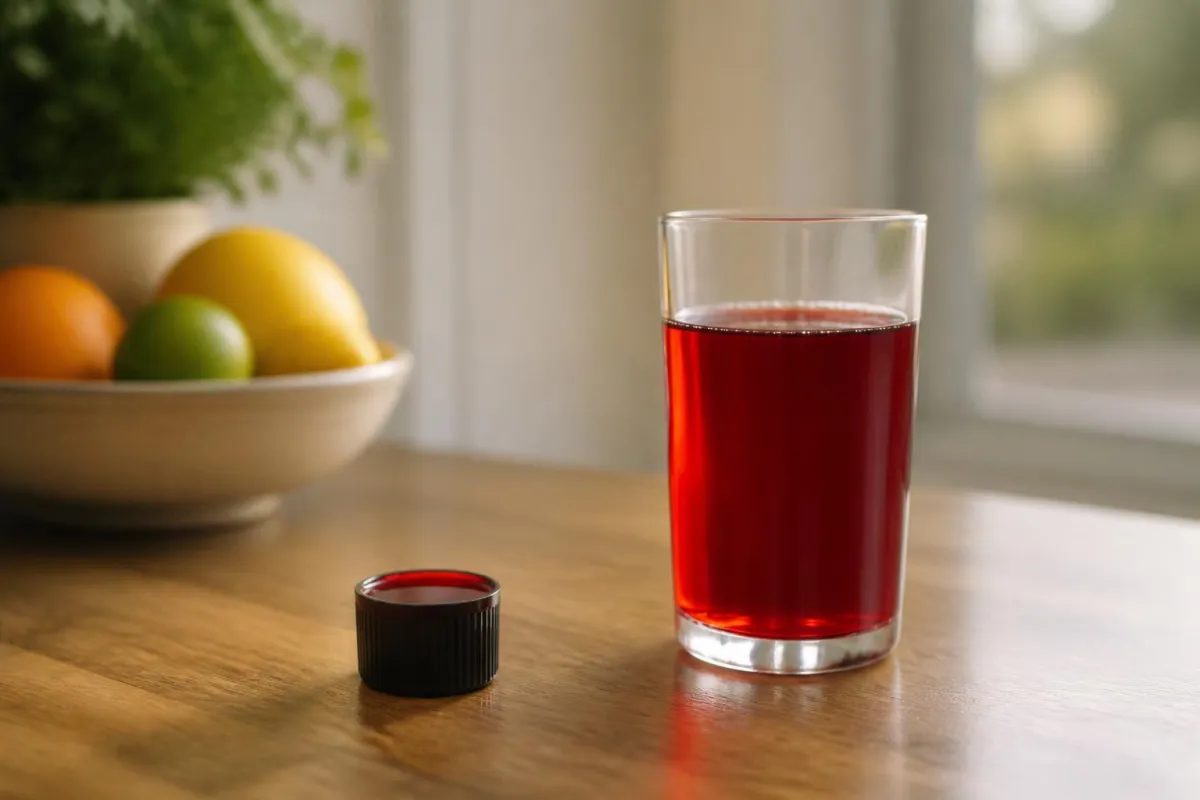
If by fasting you mean water only, then a squash drink usually does break the fast. If you mean a looser routine where you are mainly avoiding meals and higher-energy drinks, the answer depends on the bottle. "No added sugar" is not the same as sugar free, sweetener free, or energy free.
That is why the useful question is not only whether you can drink no added sugar squash when fasting, but what kind of fast you mean and what is actually in the drink. At Healthy Snacking, we find that most confusion comes from the label basis, concentrated versus diluted values, and from assuming that "no added sugar" settles the matter on its own.
What people usually mean by fasting
People use the word fasting for several different things.
Sometimes they mean a strict water-only fast. In that version, the rule is simple. Plain water is in, and flavoured drinks are out, whether they contain sugar, fruit juice, sweeteners, or only a small amount of energy.
Sometimes they mean a routine eating pattern with a fasting window, where the aim is to avoid meals and calorific drinks for part of the day. In that setting, people often disagree about what counts. Some include black tea, black coffee, and very low-energy drinks. Others prefer to avoid anything sweet tasting, even if the label shows little or no energy.
Sometimes they mean fasting for religious reasons. In that case, the answer depends on the faith tradition, the observance, the time of day, and any exemptions or specific rules. A general food-label article cannot overrule that.
And sometimes people simply mean, "I am trying not to snack between meals, can I have a flavoured drink without feeling that I have ruined it?" That is not the same as a strict fast, and it helps to say so.
So before deciding whether squash breaks a fast, we need to separate strict rules from informal ones. Without that, people end up arguing about different definitions.
What no added sugar squash actually tells you
On a UK label, no added sugar means the manufacturer has not added sugars to the product, and the product must not contain another ingredient used for its sweetening properties instead of added sugar. It does not automatically mean the drink contains no sugars at all. Sugars can still be present naturally, for example from fruit juice or fruit concentrate used as an ingredient.
It also does not automatically mean there are no sweeteners. Some no added sugar squash products use sweeteners to provide sweetness without adding sugar. Others do not. You have to read the ingredient list.
It does not automatically mean no energy either. A squash can still contain some calories from juice, flavourings, or other ingredients, even if the amount is low once diluted. That matters if your own fasting rule is "water only" or "nothing with measurable energy".
This is where people often get tripped up. They see no added sugar and read it as "free pass". But that claim is narrower than that. It tells you something specific about added sugars. It does not answer every other question you may have about sweetness, energy, ingredients, or whether the drink fits your own routine.
If you want a fuller explanation of the claim itself, our guide to no added sugar and low sugar label claims sets out what those phrases do and do not mean on pack. We also cover similar confusion in our piece on no added sugar cordial, because cordial and squash are often discussed as if the label claim answered everything.
Will squash break a fast?
For a strict water-only fast, yes, squash breaks the fast.
That includes most no added sugar squash, even if it is very low in calories once diluted. It is still a flavoured drink rather than plain water, and it may contain juice, acids, sweeteners, preservatives, and a small amount of energy. If your rule is strict, there is not much to debate.
For a looser fasting routine, the answer is, possibly, depending on your own rule and the bottle in your hand.
A practical way to think about it is this:
- If your rule is "water only", squash is out.
- If your rule is "no food and no calorific drinks", check whether the diluted drink provides energy and how much.
- If your rule is "avoid anything likely to feel like a soft drink habit", you may choose to avoid sweetened squash even if the energy is very low.
- If your rule is mainly about structure, such as not grazing between meals, a diluted no added sugar squash may fit more easily than juice, regular squash, or a milky drink.
None of that turns the drink into morally good or bad. It only tells you whether it matches the rule you are trying to follow.
This is also where online arguments become unhelpful. One person is judging by calories. Another is judging by insulin claims they have seen on social media. Another is following a religious practice. Another just wants something more interesting than water at a desk. They are not always answering the same question.
From our point of view, the clearest answer is this. If you want certainty, choose plain water during the fasting period. If you are using a looser routine and want a flavoured drink, do not rely on the front of pack. Read the nutrition panel and ingredient list first.
How to read the bottle without mixing up the numbers
The biggest practical mistake with squash is comparing the wrong basis.
Many bottles show nutrition for the concentrate and for the diluted drink. If you glance at one number without noticing which it refers to, you can easily overestimate or underestimate what you are actually drinking.
Look for wording such as:
- per 100ml as sold
- per serving as diluted
- per 100ml diluted
- prepared according to instructions
Those are not interchangeable. The NHS advises using nutrition information carefully because a portion and 100g are different comparison bases, and the same logic applies to drinks and dilution instructions too, NHS food labels guidance.
With squash, the concentrate in the bottle is not what most people drink straight. So if the panel gives a figure for the undiluted product, that number can look much higher than the drink in your glass. On the other hand, if the panel gives a diluted figure based on a specific mixing ratio and you pour it much stronger, your actual drink will contain more sugar, sweetener, flavouring, and energy than the diluted figure suggests.
A simple routine helps:
- Check whether the values are for concentrate or prepared drink.
- Check the stated dilution ratio.
- Compare like with like across products, ideally on the same basis.
- Notice whether the bottle also gives per serving figures, because serving sizes are set by the manufacturer and may not match the amount you actually pour.
This point matters beyond fasting. It is the same reason we warn readers not to compare per 100g with per serving as if they mean the same thing. If you want a straightforward method, our guide on how to compare no added sugar snacks without guesswork uses the same label-reading discipline.
One more UK-specific point. UK food labels follow retained rules that are closely aligned with the wider European framework people may remember, but product presentation can still vary by category and by whether values are shown for the product as sold or prepared. So even if you have seen one cordial or squash laid out a certain way before, do not assume the next bottle uses the same basis.
Common situations at home, work and on the go
At home, a common pattern is keeping one bottle of no added sugar squash in the fridge and pouring it by eye. If you are fasting informally and want to know whether the drink fits, "by eye" is where uncertainty creeps in. A weak splash in a large glass is not the same as a strong pour into a tumbler. If the label gives diluted values, those values only make sense if you are somewhere near the stated ratio.
At work, people often keep a bottle at a desk because plain water feels repetitive. If your aim is simply to get through the morning without reaching for biscuits or constant vending-machine drinks, a no added sugar squash may suit that routine better than a sugary soft drink. But it still does not become water. If you personally treat the fasting window as water only, the desk bottle belongs outside that window.
In a gym bottle, the same issue applies. A large bottle can make the drink seem negligible because it is diluted across more liquid, but what matters is how much concentrate went in overall. If you refill the bottle and top it up with more squash later, you may lose track of the total.
While travelling, convenience often wins. A quick drink from a station shop or service station can mean choosing whatever is available, and the phrase no added sugar may look reassuring when you are in a hurry. It is still worth checking whether it is a ready-to-drink product, a concentrated squash, or a flavoured water. Those are different things, and the label basis will not always be the same.
There is also a habit issue here. Some people are not asking a technical fasting question at all. They are really asking whether a flavoured drink keeps them in the pattern they want for the day. That is a personal routine question, not a moral one. The NHS Eatwell Guide also places overall balance in the context of a day or week, rather than expecting every single eating or drinking moment to carry the whole weight of a diet, NHS Eatwell Guide. That does not answer whether something "breaks a fast", but it does help keep the decision in proportion.
When the label is not enough
Sometimes the front of pack and nutrition panel still do not answer the real question.
If you need to know whether a squash contains sweeteners, read the ingredient list. If you need to know whether it contains fruit juice, check the ingredients and product description, not just the claim no added sugar. If you need to know whether it is suitable for you with an allergy or intolerance, check the ingredient list and allergen information carefully. The Food Standards Agency is clear that consumers should use ingredient and allergen information rather than making assumptions from general claims, Food Standards Agency consumer allergy guidance.
There are also limits to what a general article can do.
We cannot tell you whether a particular fasting routine is right for you medically. We cannot settle faith-specific fasting rules. We cannot infer personal suitability from a broad label claim. And we should not pretend that one phrase on the bottle answers all of that.
So the practical bottom line is:
- For strict water-only fasting, no added sugar squash still breaks the fast.
- For looser fasting routines, it depends on your own rule and on the actual product.
- No added sugar does not mean no sugars, no sweeteners, or no energy by default.
- Always check whether the numbers are for the concentrate or the diluted drink before drawing conclusions.
If you are unsure because the bottle has changed, reformulation is another reason to re-check the details rather than relying on memory. We cover that in what to re-check when a label changes.
Healthy Snacking is an editorial publication by Fleeta Limited, so our job here is not to hand down rules, but to make the label easier to use. In practice, the most reliable answer to "can you drink no added sugar squash when fasting" is, "not on a strict water-only fast, and only after checking the actual bottle if your fasting rule is looser." That is less catchy than a blanket yes or no, but it is the answer that matches how UK labels really work.