How to judge muesli with no added sugar or salt
no added sugar does not mean low in sugar overall
On this page
- What this label combination does and does not tell you
- Why muesli needs a different check from other no added sugar foods
- Compare muesli fairly with per 100g first
- Then check how the packet defines per serving
- Read the ingredients list before you decide it suits you
- Storage, use and everyday context matter as much as the claim
Choosing a muesli that says no added sugar and no added salt can be a sensible starting point, but it is only a starting point. Those claims tell you something specific about what has not been added during manufacture. They do not tell you everything about the sugar already present from fruit, the salt level that remains naturally, the fibre content, the ingredient balance, or what a realistic bowl looks like once you pour it.
For muesli in particular, the fairest way to judge it is to compare labels in stages. First, use the nutrition table per 100g so you are comparing like with like, as the NHS advises when using food labels to compare products NHS food labels. Then look at the packet’s own per serving definition, because serving sizes vary a lot. Finally, read the ingredients list properly before deciding whether a no added sugar or salt muesli actually suits your routine.
What this label combination does and does not tell you
If a packet says no added sugar, the claim has a defined meaning in UK food law. It means sugars have not been added to the food, and the product should not contain ingredients used for their sweetening properties. Where sugars are naturally present, the label should also make that clear, often with wording such as “contains naturally occurring sugars”. This is different from saying the product is low in sugar. We explain that distinction in more detail in our guide to the difference between no added sugar and low sugar claims.
A no added salt style claim tells you something narrower than many people assume. It generally means salt has not been added as an ingredient. It does not mean the food is salt free, because ingredients can contribute naturally occurring sodium. In muesli that natural amount is often modest, but the claim itself is not a guarantee of a very low figure. You still need the nutrition panel to see the actual salt value.
So what can you infer from this combination? Usually, that the manufacturer has avoided adding table sugar, syrups or salt during formulation. That can make comparison easier if you want a plainer cereal base. It may also mean the sweetness is coming from ingredients such as raisins, dates or other dried fruit rather than from added sugar.
What remains unknown is just as important. The front of the pack does not tell you:
- how much total sugar the finished muesli contains
- whether dried fruit makes up a large or small share
- how much fibre it provides
- how energy, fat and saturates compare with similar products
- whether it contains sweeteners
- whether it contains allergens such as nuts or gluten containing cereals
- whether the packet’s suggested bowl is smaller than the one you actually eat
That is why we do not treat a claim as a verdict. It is a useful clue, not a full assessment.
Why muesli needs a different check from other no added sugar foods
Muesli is a narrower case than many other foods carrying a no added sugar claim. The reason is the combination of dry cereal ingredients and fruit.
With drinks, yoghurts or ice creams, the main question is often whether sugar has been added and how the total sugar compares with alternatives. With muesli, naturally occurring sugars can still add up because dried fruit is concentrated. Removing water concentrates what is left, including sugars already present in the fruit. So a muesli can genuinely make a no added sugar claim and still show a noticeable total sugar figure on the nutrition table.
That does not make the claim misleading by default. It means the claim answers one question only. It does not answer how sweet the product is overall, or how much fruit is doing the work.
The dry format matters too. Muesli is usually eaten in measured handfuls, bowls or tubs, and what counts as one portion varies from person to person. A cereal that looks light can become a substantial serving once you add milk, yoghurt, seeds or extra fruit. That makes label reading more dependent on units and portion definitions than it is for some other no added sugar foods.
There is also less room for assumptions based on category. Two mueslis can both say no added sugar, yet one may be mostly oats with a little fruit, while another may contain several dried fruits, fruit juice concentrates, nuts and seeds in very different proportions. The claim does not tell you which sort you are holding.
If you want a broader method for this category, our guide on how to compare no added sugar muesli in the UK looks at the same issue from the cereal side. Here, we are focusing on the extra caution needed when no added sugar appears alongside a no added salt style message.
Compare muesli fairly with per 100g first
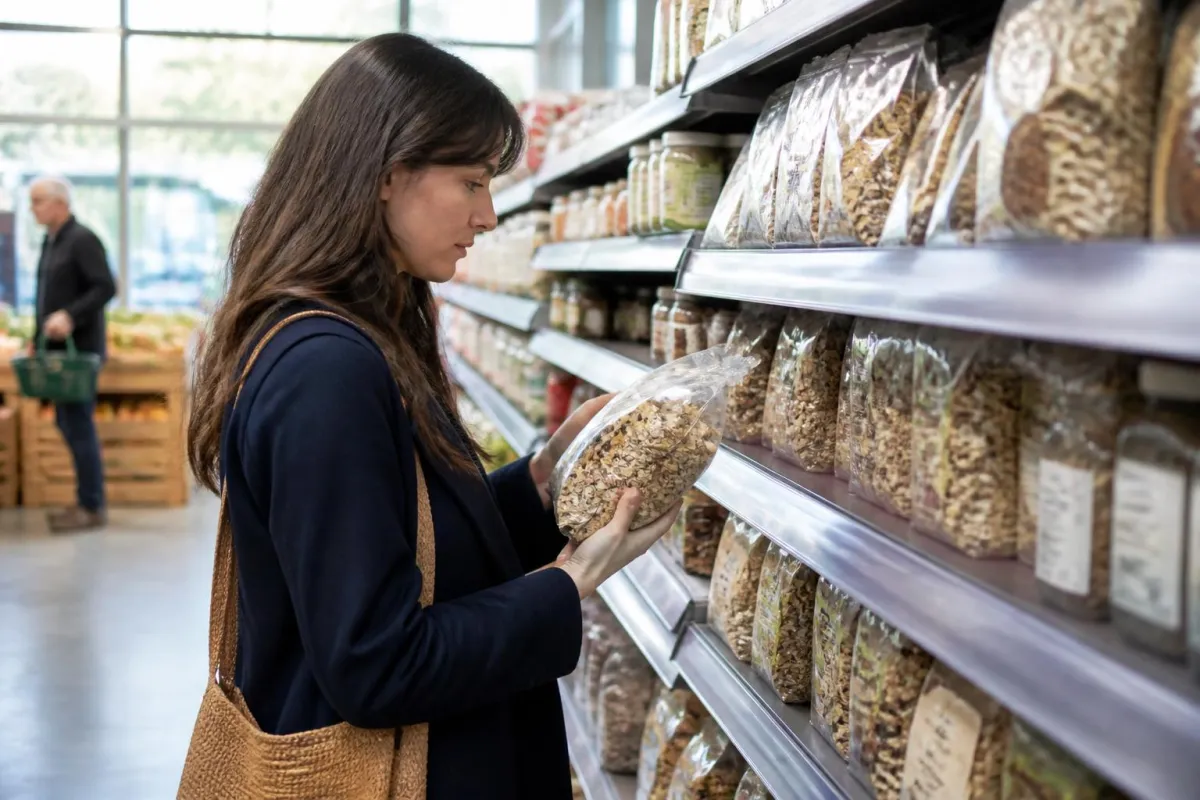
When you are standing in front of two or three packets, start with per 100g. This is the cleanest comparison base because every product is measured on the same scale. The NHS specifically distinguishes between per 100g and a portion, and warns that they are different bases for comparison NHS food labels.
For muesli, per 100g helps you compare at least six useful things without being distracted by marketing language:
- sugar
- salt
- fibre
- fat
- saturates
- protein
Sugar is the obvious one, but not the only one. A no added sugar or salt muesli may still differ a lot from another on fibre or saturated fat, especially if nuts, coconut or fruit content vary.
A practical way to read the table is this:
- Check the sugar value per 100g.
This tells you the total sugars in the finished product, including those naturally present in dried fruit.
- Check the salt value per 100g.
This confirms whether the product is merely unsalted in formulation or also low in salt in practical terms.
- Check fibre per 100g.
Muesli is often chosen partly for fibre, but the claim on the front does not guarantee a high fibre figure.
- Check the ingredient list alongside the numbers.
A lower sugar figure with very little fruit may suit one person, while another may prefer more fruit and accept the higher sugar figure that comes with it.
- Keep the comparison within the same category.
Compare muesli with muesli, not with porridge oats, granola or breakfast biscuits, unless you are deliberately choosing between categories.
This first stage avoids a common mistake, comparing one product per 100g with another per serving. That is not a fair match. A packet with a tiny suggested serving can look lower in sugar or salt per bowl even when its per 100g values are higher.
Then check how the packet defines per serving
Once you have used per 100g to shortlist products, move to per serving. This is where the label starts to connect with real life.
Serving sizes on cereal packets are not fixed by what you personally pour at home. One brand may define a serving as 30g, another as 40g or 45g. That difference matters. If two mueslis have similar nutrition per 100g but one uses a smaller serving size on the front of pack, the per serving numbers can make it look lighter than it really is.
For muesli, this matters more than people expect because bowl sizes vary with context.
At home, someone may pour a quick weekday bowl by eye and end up with more than the packet’s stated serving. At work, a desk breakfast in a pot may be smaller. While travelling, a tub prepared the night before with yoghurt or milk may be larger again because it needs to last until lunch.
So when you read per serving, check three things:
- the gram weight used for the serving
- whether the values include milk or yoghurt
- whether that amount resembles what you would actually eat
Some labels present cereal alone, others show cereal with a specified amount of semi-skimmed milk or another addition. If you miss that detail, you can compare the wrong numbers.
A practical test is to picture the bowl. If the packet says 35g per serving, ask yourself whether that is what you would pour without measuring. If not, the per serving line is still useful, but only once you mentally scale it to your own routine.
This is not about policing bowl size. It is about understanding what the numbers describe. A serving on the packet is a manufacturer-defined reference point, not a verdict on what you should eat.
Read the ingredients list before you decide it suits you
The ingredients list often tells you more than the front claim.
Start with the order. Ingredients are listed in descending order by weight at the time of manufacture. If oats come first and dried fruit appears much later, that suggests a different balance from a product where multiple fruits appear near the top. You do not need to memorise percentages for every ingredient to get a useful impression of the mix.
For a no added sugar or salt muesli, pay particular attention to dried fruit. Raisins, sultanas, dates, apricots and apple pieces are common. They can be a perfectly ordinary part of muesli, but they change the overall sugar figure even when no sugar has been added separately. If you prefer a less sweet cereal, the ingredient order helps you spot that before you get home.
Then look for added sweeteners. A no added sugar claim does not automatically mean unsweetened in the everyday sense. Some products may use permitted sweeteners instead of added sugar. If you want to avoid that style of formulation, the ingredients list is where you find out.
Nuts and seeds also matter. Almonds, hazelnuts, sunflower seeds, pumpkin seeds, flax and chia can change the texture, fat profile, fibre content and practical satiety of a bowl. They may be exactly what one reader wants and exactly what another wants to avoid. The claim on the front will not settle that.
Allergen information matters too. UK food businesses must provide allergen information for prepacked foods, and readers should use the ingredients list and allergen emphasis on pack rather than relying on assumptions Food Standards Agency consumer allergy guidance. Muesli commonly contains cereals containing gluten and may contain nuts or traces from shared production. A no added sugar or salt claim says nothing about allergy suitability.
This is also where label-reading needs a UK note. In the UK, nutrition and ingredient labelling follows retained domestic rules. In the EU generally, the broad approach to mandatory nutrition information and ingredient listing is similar, but products on sale in the UK must still be checked on their own labels because wording, formatting and market-specific formulations can differ. For readers buying while travelling, that is another reason not to rely on memory from a previous packet.
Storage, use and everyday context matter as much as the claim
Once opened, muesli is an everyday cupboard food, not a one-time label exercise. How you store and use it affects whether it stays pleasant to eat and easy to fit into routine.
After opening, keep it sealed and dry, and follow any pack instructions. A well closed original bag folded down inside the box, or a clean airtight container, usually helps protect texture. Dry cereal is not the same as chilled high-risk food, but general Food Standards Agency guidance still supports following storage instructions and protecting food from conditions that shorten its usable life Food Standards Agency food storage guidance. If the cereal smells stale, has picked up moisture, or shows any sign of pests, do not treat the front claim as reassurance. Condition matters.
Re-check the label when the packaging changes. Manufacturers reformulate, alter fruit content, change serving sizes and redesign claims. A cereal you bought last year may not match the current pack exactly. If you depend on a product being free from added sugar or if you monitor allergens closely, read the new packet rather than assuming continuity.
In everyday adult routines, it also helps to stop treating one bowl as a verdict on the whole diet. The NHS Eatwell Guide frames dietary balance across the day or week, not as something every single item must achieve on its own NHS Eatwell Guide. That is useful perspective for muesli. A plain bowl at home, a larger pot at work, or a travel breakfast with yoghurt are different situations. The best label choice is often the one that fits those situations without confusion.
For some people, that means choosing a simpler muesli and adding their own fruit. For others, it means buying one with fruit already included because it is easier to keep at work or pack for a train journey. Neither approach is automatically better. The useful question is whether the label matches how you actually use the food.
If you want a practical rule of thumb, use this order:
- front claim for the initial shortlist
- per 100g for fair comparison
- per serving for real-world context
- ingredients and allergens for actual suitability
- storage and routine for whether it will work in practice
That method keeps the claim in proportion. A no added sugar or salt muesli can be a perfectly reasonable option, but the words on the front are not the whole story. The full label is where the useful judgement happens.