What no added sugar tells you on a UK food label
no added sugar refers to ingredients added during manufacture, not total sugar in the food.

On this page
If a UK label says no added sugar, the basic point is simple. The manufacturer is telling you they have not added sugar as an ingredient, and have not added another ingredient used for its sweetening effect, to that food. It does not mean the food contains no sugar at all. Many foods contain sugars naturally, including fruit, milk and some vegetables.
That matters because the no added sugar meaning is narrower than many people assume. It is a claim about what has or has not been added during making the product. It is not a shortcut for low sugar, low calorie, or automatically a better choice in every situation. To work out what the claim is useful for, you still need the ingredients list and the nutrition table, and you need to compare like with like, especially per 100g and per serving, as the NHS advises when reading food labels (NHS guidance on comparing food labels).
What no added sugar means on a label
In plain UK label terms, no added sugar means the product has not had sugar added to it, and has not had another ingredient added for its sweetening effect. In practice, that covers obvious ingredients such as sugar, brown sugar, glucose syrup and honey, but it also covers things added mainly to sweeten, such as fruit juice concentrate in some products.
The important distinction is between sugars that are already present in the food, and sugars that are added during manufacture. A pot of plain yoghurt contains sugar naturally present in milk, mainly lactose. A box of raisins contains sugars naturally present in grapes, now concentrated because the water has been removed. A carton of fruit juice can contain plenty of sugar naturally present from fruit, even if no table sugar has been added.
That is why a product can honestly say no added sugar and still show a noticeable sugars figure in the nutrition table.
For UK readers, this sits within retained food information rules and guidance used in Great Britain. Northern Ireland follows EU food law arrangements more directly under the Windsor Framework, so some legal wording around food information can differ in the background. In everyday supermarket use, though, the practical reading point is the same across the UK, a no added sugar claim is about added sweetening ingredients, not a promise that the food is sugar-free.
You may also see extra wording such as “contains naturally occurring sugars”. That is often there because without it, some shoppers would assume the product contains no sugar at all. The phrase is useful, but it is still only part of the picture. The actual amount is in the nutrition table.
A quick example helps. Compare two peanut butters. One contains peanuts and nothing else. One contains peanuts, palm oil and sugar. The first may carry a no added sugar claim because no sugar has been added. The second cannot. But both products are still foods with energy, fat and a specific nutrient profile. The claim tells you one limited thing, not everything you might want to know. If you want a worked example, our guide to reading peanut butter labels properly goes into the detail.
What the claim does not tell you
The main trap is assuming the claim answers a bigger question than it actually does.
First, no added sugar does not mean low sugar. A bag of dried mango may have no added sugar and still contain a high amount of sugar naturally present from the fruit. The same can apply to dates, raisins and fruit purées.
Second, it does not mean low energy. Some foods without added sugar are energy-dense because of fat, starch, concentrated fruit, or simply because they are dry and compact. Nut butter, flapjack made without added sugar, and dried fruit bars are all easy examples.
Third, it does not mean healthier overall. Overall usefulness depends on the whole food, how much you eat, what you pair it with, and what the rest of the day looks like. The NHS Eatwell Guide frames dietary balance across a day or week, not as a verdict on one item in isolation (NHS Eatwell Guide).
Fourth, it does not mean suitable for every reader. A no added sugar label does not settle questions about allergens, intolerances, texture, dental concerns, digestive tolerance, or any personal dietary plan. If you need to avoid a specific ingredient, the ingredients list and allergen information matter more than the front-of-pack claim. The Food Standards Agency is clear that consumers should check ingredient and allergen information rather than infer suitability from a general claim (Food Standards Agency consumer allergy guidance).
Finally, it does not tell you whether the product will actually help with your own routine. A no added sugar cereal that you dislike, overpour, or only eat when mixed with sweet extras may not be more practical for you than a different cereal you can use consistently and in a way that suits your mornings.
This is where a lot of label confusion starts. People often treat no added sugar as a badge of approval. It is better to treat it as one piece of product information.
For a direct comparison between claims, see our explainer on the difference between no added sugar and low sugar.
How to check the rest of the label properly
A quick, repeatable method works better than trying to decode everything at once.
Start with the ingredients list. This tells you what the product is made from, in descending order by weight at the time of manufacture. If you are checking a no added sugar claim, look for obvious sweetening ingredients such as sugar, syrups, honey or concentrated fruit ingredients used in a way that suggests sweetening. The ingredients list also helps you spot whether sweetness is coming from fruit purée, dates or juice rather than from table sugar.
Then check the nutrition table. The line marked “of which sugars” tells you the total sugars in the product, whether naturally present or added. It does not split them neatly into those two categories on the pack. That is why you need both the claim and the table.
Next, choose one comparison basis and stick to it.
Use per 100g when you are comparing similar products across brands or flavours. This is the standard basis and usually the fairest way to compare cereals with cereals, yoghurts with yoghurts, or bars with bars.
Use per serving when you want to know what you are likely to eat in real life from that specific pack. But be careful. Serving sizes are set by the manufacturer and can vary a lot. One cereal may call 30g a serving, another 45g. One snack bar is a single serving because the whole bar is wrapped individually. A share bag may list a serving that bears little relation to what you normally eat.
The NHS specifically notes that a portion and 100g are different comparison bases, so it is easy to misread a label if you switch between them mid-comparison (NHS food label guidance).
A practical rule is this:
- Compare products using per 100g
- Estimate your own likely intake using per serving, or by weighing what you actually use if the product is one you buy often
- Do not compare one product per 100g with another per serving
For example, imagine two granolas both say no added sugar. One shows 18g sugars per 100g and suggests a 45g serving. Another shows 12g sugars per 100g and suggests a 30g serving. If you only glance at the per serving numbers, you may miss that the serving sizes are different. Per 100g gives you the clearer brand-to-brand comparison.
Also check context around the claim. Is this a jam, where sweetness is central to the product? A bread, where sweetness may be low anyway? A yoghurt with fruit purée? The same claim can mean different things in practical shopping depending on the food category. We cover that in more detail in our guides to judging jam labels without guesswork and other category-specific examples.
Common examples that confuse people
Some foods confuse shoppers because they taste sweet, contain a fair amount of sugar, and still legitimately say no added sugar.
Dried fruit is one of the clearest examples. Raisins, apricots and dates can carry a no added sugar claim if nothing sweetening has been added. But removing water concentrates what was already in the fruit. A small handful can contain much more sugar than the same weight of fresh fruit would suggest to your eye, simply because it is compact and easy to eat quickly.
Yoghurt is another. Plain yoghurt contains naturally occurring milk sugars. Fruit yoghurt may or may not have added sugar, depending on the recipe. If fruit purée is used and no sugar is added, the pot may still contain a meaningful amount of sugars overall. The front of pack does not tell you the amount. The nutrition panel does.
Fruit juice is a common stumbling point because many people hear “no added sugar” and mentally translate it to “low sugar”. Juice can be labelled no added sugar because the sugars come from the fruit itself, not from added sugar. But the sugars are still there in the drink. Squash can be even more confusing because some versions use sweeteners, some contain juice, and some combine several claims at once. Our guide to what squash labels really tell you unpicks that step by step.
Breakfast cereals often cause similar confusion. A cereal sweetened with dried fruit can say no added sugar even though the finished cereal is still sweet and the sugars figure is not especially low. That does not make the claim false. It just means the sweetness comes from ingredients already containing sugar rather than sugar added separately. If cereal is a regular purchase for you, our article on how to compare no added sugar cereals properly is worth keeping handy.
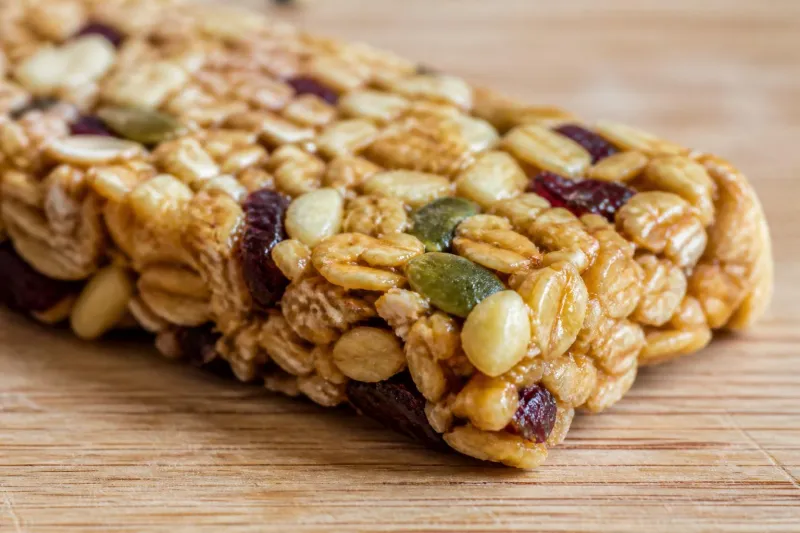
Banana bread, fruit bars and date-based snack balls sit in the same territory. They are often marketed around the absence of added sugar, but their sweetness may come from mashed banana, dates, raisins or apple concentrate. Again, that is not automatically a problem. It simply means the claim does not tell you the whole nutritional story.
Jam is another classic UK cupboard example. A no added sugar jam may rely on fruit sweetness and sometimes sweeteners, depending on the product. It can still be sweet, and you still need to read both the ingredients and the nutrition table to understand what has changed compared with a standard jam.
How to use the claim in everyday snack planning
The most useful way to treat no added sugar is as a filter, not a verdict.
At home, it can help when you are choosing between similar products and want to avoid extra sweetening ingredients where that matters to you. For example, if you are picking between two peanut butters, two cereals or two yoghurts, the claim may narrow the field. But after that, check the ingredients list and the sugars figure per 100g so you know what you are actually comparing.
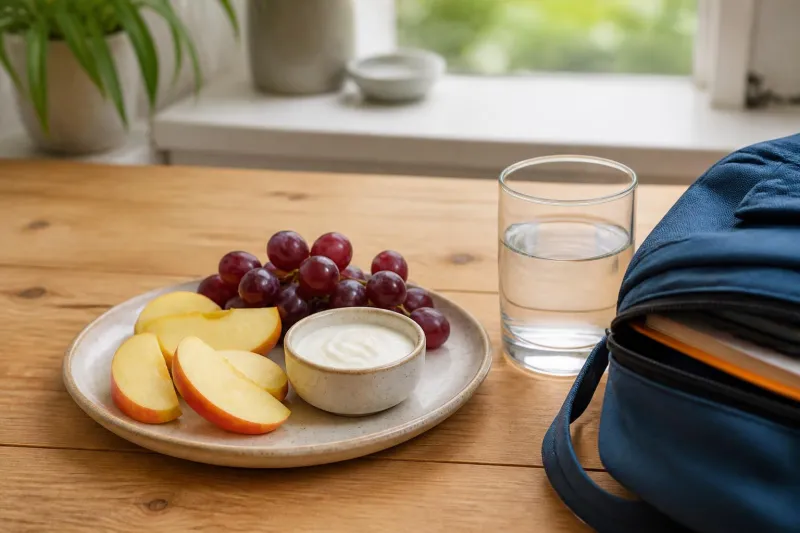
At work, the claim can be useful when you want snacks that are straightforward and less reliant on obviously sweet formulations, such as plain yoghurt, unsweetened nut butter, oatcakes, nuts, or fruit paired with something savoury. The aim is not to build a perfect desk drawer. It is to make routine choices easier without turning the label into a moral test.
While travelling, no added sugar can be handy as a quick first scan on shelf-stable foods, especially where packaging makes products look similar. But travel is also where serving sizes, compact foods and concentrated fruit can catch people out. A small pack of dried fruit or a fruit bar may be convenient and fit the claim, while still delivering a lot of sugar in a small amount of food. That may be fine for your purposes. The point is to notice it, not to be surprised by it.
In everyday planning, we find three questions more useful than asking whether a product is “good” or “bad”.
- What exactly has been left out?
- How much sugar does the finished product contain per 100g and per serving?
- Is this food practical for the way I actually eat at home, at work or on the move?
Those questions keep the claim in proportion.
It is also worth remembering that not every snack needs to carry a front-of-pack promise. Sometimes the simplest options have no claim at all. A banana, plain nuts, a slice of toast, or plain yoghurt may tell you enough through the ingredients and nutrition information without any headline wording. The NHS approach to labels is broadly about using the information to compare foods sensibly, not about chasing one label claim across your whole trolley (NHS guidance on food labels).
So, what does the no added sugar meaning come down to in practice? It tells you something specific and limited, that extra sugar, or another ingredient added for its sweetening effect, has not been added. That is useful information. It is just not the final answer. The rest of the label still matters, and the most reliable comparison is the one that keeps ingredients, per 100g values and realistic serving sizes in view at the same time.