What no added sugar cake really tells you on the label
"no added sugar" describes how a product was made, not automatically how much sugar it contains.
On this page
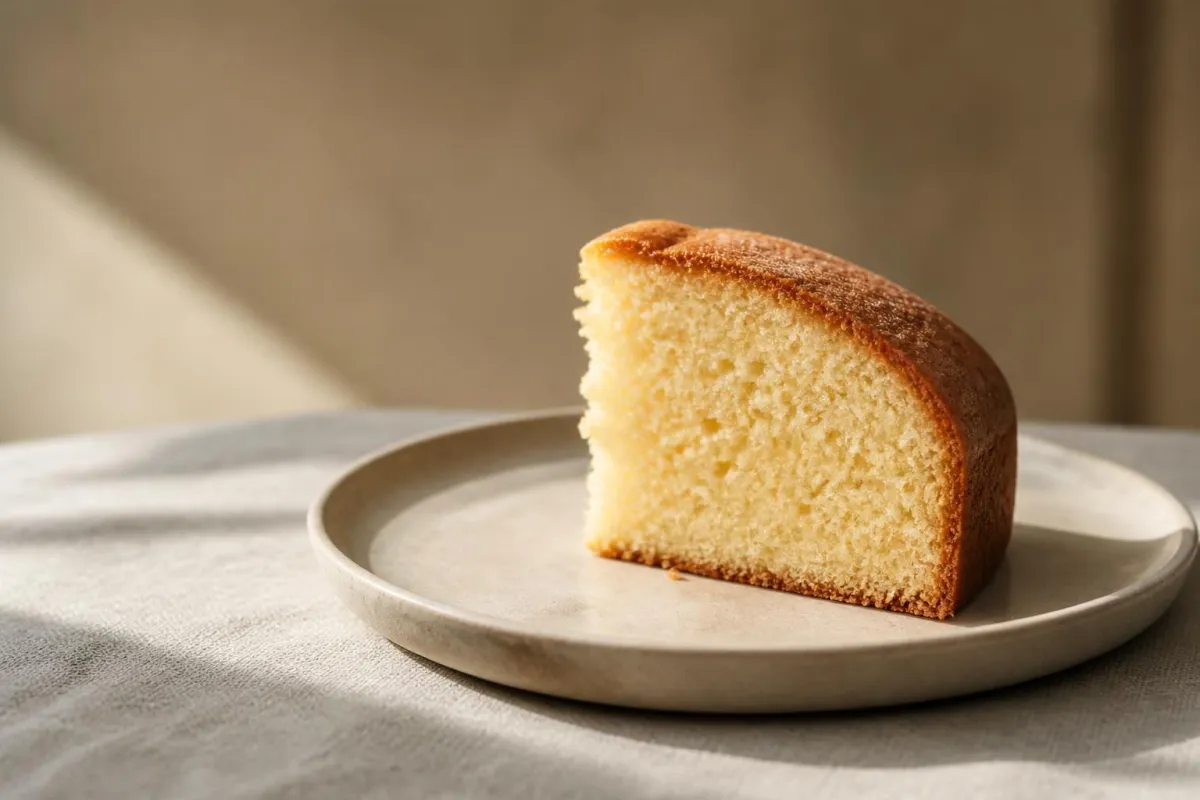
A cake labelled no added sugar tells you one specific thing, and not much more on its own. It means sugar has not been added as an ingredient during manufacture, and the product should not be using other ingredients for their sweetening effect in a way that would undermine that claim. It does not mean the cake contains no sugar in total, because sugars can still be present naturally in ingredients such as fruit, milk, flour or purées.
That distinction matters because many people read a front of pack claim as a shortcut for the whole product. With cake, that shortcut is especially unreliable. A no added sugar cake may still be sweet, energy-dense, made with refined flour, or unsuitable for someone with particular dietary needs. To understand what you are actually buying, you need the back of pack details as well as the headline claim. The NHS also advises using the nutrition label to compare foods carefully, and notes that per 100g and a portion are different comparison bases, which should not be mixed when judging products (NHS guidance on reading food labels).
What no added sugar means on a cake label
In plain English, no added sugar means the manufacturer has not added sugar to the cake recipe. In UK food labelling, that is a controlled nutrition claim rather than a vague marketing phrase. The claim is about how the product was made, not a blanket statement that the finished cake is low in sugar or free from sugars altogether.
That is why a cake can carry this claim and still list sugars in the nutrition panel. If the recipe includes dates, raisins, banana, apple purée or fruit juice concentrate, those ingredients can contribute sugars that are naturally present in them. The total sugar figure on the label reflects sugars in the finished product, whatever their source.
This is where readers often get tripped up. They see no added sugar and assume no sugar. Those are not the same thing. A cake made with mashed banana and dates instead of table sugar may still contain a meaningful amount of sugar from those ingredients. The claim tells you something useful about formulation, but it does not replace the need to read the full label.
There is also a difference between UK specific practice and broader EU references people may have seen online. Many explanations of nutrition claims still point to EU rules because they shaped the framework used on UK labels. In Great Britain, the practical point for shoppers is the same, the claim is regulated and has a defined meaning, but readers should be careful with older articles that talk as if all EU labelling rules apply unchanged in every detail across every UK market. If you are comparing guidance, use current UK sources where possible, then read the actual pack.
If you want the broader groundwork behind this claim before focusing on cakes, our guide to what no added sugar tells you on a UK food label sets out the basics.
What the claim does not tell you
A no added sugar claim does not tell you that the cake is low in sugar. Low sugar is a different claim with its own criteria. A product can qualify for one and not the other. That is why the front of pack wording matters, and why similar sounding phrases should not be merged in your head. We unpack that distinction in our guide to the difference between no added sugar and low sugar label claims.
It also does not tell you that the cake is low in energy. Cakes can contain fat from butter, oils, cream, nuts or seeds, and carbohydrate from flour and fruit ingredients. Even without added sugar, the overall energy content may still be comparable to other cakes, or only slightly different. If your goal is simply to compare two options for an ordinary snack or packed lunch, the energy figure may be relevant, but it should be read alongside the rest of the panel, not treated as the only number that matters.
The claim does not tell you that the cake is suitable for everyone. Someone avoiding certain sweeteners, checking allergens, limiting caffeine, managing coeliac disease, or choosing foods around personal medical advice cannot rely on the headline alone. The Food Standards Agency makes clear that ingredient and allergen information matters for consumers, and that suitability should not be inferred from a broad front of pack statement (Food Standards Agency allergy guidance).
It does not tell you how sweet the cake will taste. Some products rely on fruit purées, some on polyols or other sweeteners, and some simply aim for a less sweet profile. Two cakes with the same claim can be very different to eat.
It does not tell you whether the cake is filling, convenient, messy to carry, or likely to keep well once opened. Those are practical issues, but they matter in real life. For work bags, train journeys and desk drawers, packaging, crumb level, portion format and storage instructions can make more difference than the front of pack claim.
Finally, it does not tell you whether the cake fits neatly into a balanced diet overall. The NHS Eatwell Guide frames dietary balance over a day or week, not as a test each individual snack has to pass (NHS Eatwell Guide). That is useful context. A label can help with comparison, but it cannot make the whole decision for you.
How to compare cakes using per 100g and per serving
The most useful habit when comparing a no added sugar cake with another cake is to choose one comparison basis and stick to it. If you switch between per 100g on one pack and per serving on another, it is very easy to reach the wrong conclusion.
Per 100g is the cleaner basis for comparing similar products. It strips out portion size differences set by the manufacturer and lets you compare like with like. If you are standing in a shop deciding between two loaf cakes, two brownie bars or two mini muffin packs, start with per 100g for energy, fat, saturates and sugars.
Per serving is useful for a different question, which is what you are likely to eat in one go. But serving sizes are not standard across all cakes. One brand’s serving may be half a slice, another may be one bar, another may be one mini cake, and another may be a suggested amount that few people would actually cut at home. The NHS specifically notes that 100g and a portion are different comparison bases, so they should not be mixed casually (NHS guidance on food labels).
A practical way to compare is this:
- Check the pack size and the stated serving size.
- Compare products first on a per 100g basis.
- Then check what one actual serving means in grams.
- If needed, work out what your likely portion would be, especially for cakes sold whole or in slices of uneven size.
Here is where mistakes commonly happen.
One cake may look lower in sugar per serving simply because the serving is much smaller. Another may look moderate per serving but high per 100g, which tells you the product itself is concentrated even if the suggested portion is modest. Neither figure is wrong, but they answer different questions.
For example, imagine two snack cakes:
- Cake A shows 12g sugars per serving, serving size 35g
- Cake B shows 14g sugars per serving, serving size 55g
At a glance, Cake A looks lower. But if you compare per 100g, Cake A may actually be sweeter overall. Without using the same basis, you cannot tell.
The same applies to energy. A miniature cake can look light per serving, but if it is very small and dense, the per 100g figure may be close to a standard cake. That does not make it a bad choice. It just means the serving figure alone does not tell the whole story.
When you are comparing products within the same style, brownies with brownies, loaf cakes with loaf cakes, mini cakes with mini cakes, the per 100g basis is usually the fairest starting point. When you are planning your actual day, such as what to take to work or put in a bag for a journey, per serving becomes more useful because it reflects the format you are likely to eat.
Why ingredients matter as much as the headline claim
The ingredients list often tells you more than the words no added sugar on the front. That is where you see what is providing sweetness, texture and bulk.
Fruit ingredients are a common example. Dates, raisins, apple purée, banana, concentrated fruit purées and similar ingredients can all make a cake taste sweet without adding table sugar. For some shoppers, that is exactly what they are looking for. For others, it makes no practical difference. The point is not that one is automatically better, but that the source of sweetness affects texture, flavour and the total sugar figure.
Sweeteners also matter. A no added sugar cake may use sweeteners to replace some or all of the sweetness usually supplied by sugar. If so, the ingredient list will show that. Some people are happy with that. Others prefer to avoid certain sweeteners for taste or digestive comfort. The front of pack claim does not tell you which approach the manufacturer has taken.
Flour type and added fibre ingredients can change the product as well. A cake made with oats, ground almonds or added fibres may have a different texture and nutrition profile from one based mostly on refined wheat flour. Again, that is not a moral ranking. It is simply part of understanding what is in the packet.
Allergens are non negotiable. Cake commonly contains wheat, egg, milk, soya, nuts or sesame, and some products made without added sugar may use nuts or dairy ingredients to improve texture or richness. People with allergies should check the ingredients list and allergen information every time, including on products they have bought before, because recipes can change. The Food Standards Agency’s consumer guidance is the key reference point here (Food Standards Agency allergy guidance).
Storage instructions matter too, especially for cakes bought for later use. A product with fruit ingredients or a softer texture may have different instructions once opened. If you are packing snacks ahead for work or travel, follow the pack directions. The Food Standards Agency’s general storage guidance is a useful reminder that chilling, freezing and defrosting instructions are there for a reason (Food Standards Agency storage guidance).
If you want a closely related example, our piece on judging banana bread with without added sugar claims shows how fruit-based sweetness can complicate quick assumptions.
When a no added sugar cake may be useful in everyday life
There are plenty of ordinary situations where this label can be useful, as long as you treat it as one piece of information rather than a verdict on the whole product.
At home, it can help narrow the field when you want a cake option that does not rely on added sugar as part of the recipe. That may matter to you for taste preference, for household shopping habits, or simply because you are trying to compare similar products more carefully. If you know you prefer cakes sweetened mainly with fruit ingredients, the claim can be a quick signpost before you read the back.
At work, it can be helpful when you want something shelf-stable or easy to portion without overthinking it. A wrapped cake bar with no added sugar may suit a desk drawer, meeting bag or commuter backpack better than a larger cake that needs cutting. In that context, the practical questions are often more important than the headline claim. Does it crumble everywhere, melt, need refrigeration after opening, or come in a portion you would realistically eat?
For travel, the label can help when you are choosing between products in a station, airport or service stop with limited time. You may not be trying to optimise anything dramatic. You may simply want a cake that aligns with your usual shopping habits and is easy to carry. The claim can serve as a quick filter, then the nutrition panel and ingredients list do the real work.
It may also be useful in mixed-household shopping, where different adults want different things from the same cupboard. One person may care mainly about sweetness level, another about ingredients, another about convenience. A no added sugar cake can sometimes sit in that overlap, but only if the rest of the label also fits what the household needs.
What it cannot do is guarantee that the cake will meet every goal people sometimes project onto it. It is not a promise of low sugar, low energy, high fibre, long satiety, or universal suitability. It is a narrower statement than that.
That narrower statement is still worth having. Used properly, it can save time and make comparisons more straightforward. Used as a shortcut for the whole product, it usually creates confusion.
At Healthy Snacking, published by Fleeta Limited, our view is simple. Front of pack claims are most useful when you know their limits. With cake, no added sugar is a starting point. To understand what you are actually buying, check the sugars line, compare like with like using per 100g first, look at per serving for the amount you are likely to eat, and read the ingredients and allergen information in full. That approach is slower than trusting the headline, but it is far more likely to tell you what is in the packet.