After-school snacks that are practical, not overthought
A snack does not need to be perfect; balance is judged over a day or week, not from one item alone.
On this page
After-school snacks do not need to be clever to be useful. In most UK households, the practical question is whether something can bridge the gap between school and the next meal without creating extra hassle, extra arguments, or a kitchen full of half-open packets. That usually means food that is easy to keep in, easy to find, and easy for an older child or teenager to manage with ordinary supervision.
When people look for healthy after school snacks in the UK, the useful answer is rarely a perfect list. It is usually a way to judge what is already in the cupboard, fridge or school bag, and a way to organise the house so the easiest option is also one you are broadly happy to have around. The NHS also frames overall balance across the day or week, rather than demanding that every single snack does everything at once, which is a helpful starting point for real life (NHS Eatwell Guide).
What makes an after-school snack useful in a UK household
A useful after-school snack is one that fits the household routine it is meant for. For older children and teenagers, that often means one or more of the following.
It is available when they walk in hungry. If the only realistic option needs chopping, cooking, or a trip to the shop, someone may grab whatever is nearest instead.
It is filling enough for the gap it needs to cover. A snack at 3.45 pm before a 6 pm dinner is doing a different job from a snack before evening sport, music lessons or a late family meal. The first may just need to take the edge off hunger. The second may need to be more substantial.
It survives normal household life. Some foods are sensible in theory but disappear because they are awkward to store, get crushed in a bag, or need more fridge space than the household has.
It works for the age and independence of the person eating it. Teenagers often want something they can sort out without asking permission or instructions. Clear options that they recognise can be more useful than a worthy plan nobody follows.
It does not turn one snack into a test of character. Food is not morally good or bad, and snacks do not need to be sorted into virtuous and disastrous. A packet of crisps, a yoghurt, toast, fruit, cereal with milk, a sandwich, or leftovers can all be practical choices in the right context. The point is not to crown a winner. The point is to know what each option actually offers and whether it suits the moment.
That is why broad patterns often help more than idealised examples. You might keep some snacks that are mainly convenient and some that are more substantial. You might keep a few shelf-stable options for the days when the fridge is empty. You might also decide that some foods belong more naturally with meals than with grazing, not because they are forbidden, but because that arrangement works better in your house.
If you want more help comparing familiar categories without turning everything into a battle of willpower, our everyday snack guidance and our piece on choosing kids’ snacks with less sugar and less guesswork both stay grounded in labels and routine rather than hype.
How to judge a snack without turning it into a maths exercise
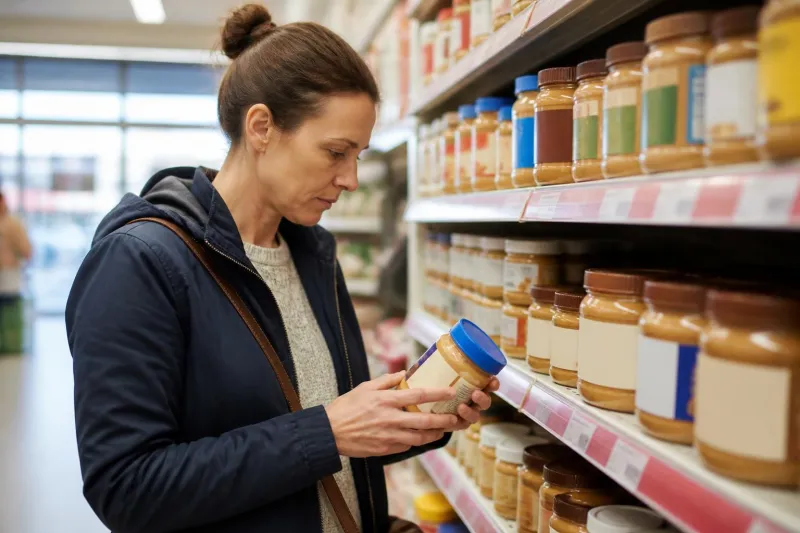
The nutrition panel can help, but only if you use the right comparison at the right time. The NHS explains that per 100g and per serving are different bases, and both can be useful depending on what you are trying to compare (NHS food labels).
The first job is to check which basis you are looking at. A cereal bar, yoghurt pouch, pack of crackers and bag of popcorn may all look comparable on the shelf, but the packet may show some figures per 100g and others per serving. If you compare one item on one basis and another item on the other basis, you can easily misread the difference.
Use per 100g when you want a like-for-like comparison between products in the same category. If you are choosing between two granolas, two flapjacks, two bags of tortilla chips or two flavoured yoghurts, per 100g helps because it strips out different manufacturer serving sizes. One brand may call half a pack a serving and another may call the whole pack a serving. Per 100g gives you a standard basis.
Use per serving when you want to know what is likely to be eaten from that packet at one time. This matters for foods sold as a single unit, such as an individual yoghurt pot, one cereal bar, or a small bag of baked snacks that will probably be finished once opened. In those cases, per serving can tell you more about the real snack than a per 100g figure that nobody will actually eat.
The catch is that serving sizes are set by manufacturers, so treat them as information, not law. If a sharing bag says a serving is 30g but the person in your house usually eats half the bag, the useful number is not the printed serving. It is the amount likely to be eaten.
A simple way to judge a snack without overthinking it is this:
First, identify the actual packet size or portion likely to be eaten.
Second, compare similar foods on a per 100g basis.
Third, sense-check the per serving figure against real life.
Fourth, look beyond one number. Sugar, fat, saturated fat, fibre, protein and salt may all matter depending on the food and the role it is playing.
For example, a higher-fibre cereal bar may be more useful than a very small sweet biscuit if the aim is to keep someone going until dinner. A yoghurt with fruit may look different from a plain yoghurt on sugar because some of that sugar comes from milk and fruit, not just added ingredients. A savoury snack that seems light may still be worth checking for salt. None of this means one food is automatically approved and another rejected. It means the label gives context.
Front-of-pack traffic lights can help with a quick scan, but they do not replace the full panel or ingredients list. They are part of the picture, not the whole picture. We cover the same label-reading approach in our guide to choosing savoury snacks without label guesswork.
One small UK-specific point matters here. Label formats and front-of-pack schemes can differ from products sold elsewhere in Europe. If you are looking at imported foods, especially from specialist shops or online marketplaces, the presentation may not match what you usually see on mainstream UK supermarket packaging. That makes it even more important to read the actual nutrition information and ingredients rather than relying on design cues.
What front-of-pack claims can and cannot tell you
A front-of-pack claim is a shortcut, not a verdict. It can tell you one limited thing about a product, but it cannot tell you everything that matters about whether that snack is practical for your household.
Take no added sugar. That claim means sugar has not been added as an ingredient, but it does not mean the food contains no sugar, and it does not tell you everything about the product on its own. Sugars can still be present naturally in ingredients such as fruit or milk. The claim also says nothing by itself about portion size, texture, how filling the snack is, or whether the rest of the label suits what you were looking for.
The same caution applies to phrases like high protein, source of fibre, baked not fried, or made with wholegrains. These claims may be factually permitted within labelling rules, but each one only highlights one aspect. A snack can make a positive-sounding claim and still be something you would want to compare properly before buying. Equally, a food without a fashionable claim is not automatically a poor choice.
That is why the packet still matters more than the slogan. Check three things together.
Look at the ingredients list, so you know what the food actually is.
Look at the nutrition information, so you can compare it on per 100g or per serving as appropriate.
Look at the packet size, because that affects what is likely to be eaten.
This matters especially when two products make similar claims but are built quite differently. One fruit-based snack may be sticky and very easy to eat quickly. Another may be portioned in a way that naturally slows things down. One savoury item may look wholesome from the branding but still be quite salty compared with another in the same category. A claim cannot answer those practical questions for you.
Claims can be useful prompts. They are not a substitute for reading the label.
Easy after-school snack patterns that reduce last-minute grabbing
Most households do better with systems than with rules. If after-school snacking regularly turns into rummaging, arguments, or five nearly empty packets on the side, the fix is often organisational rather than nutritional.
A simple pattern is to keep snacks in three places according to how they are used.
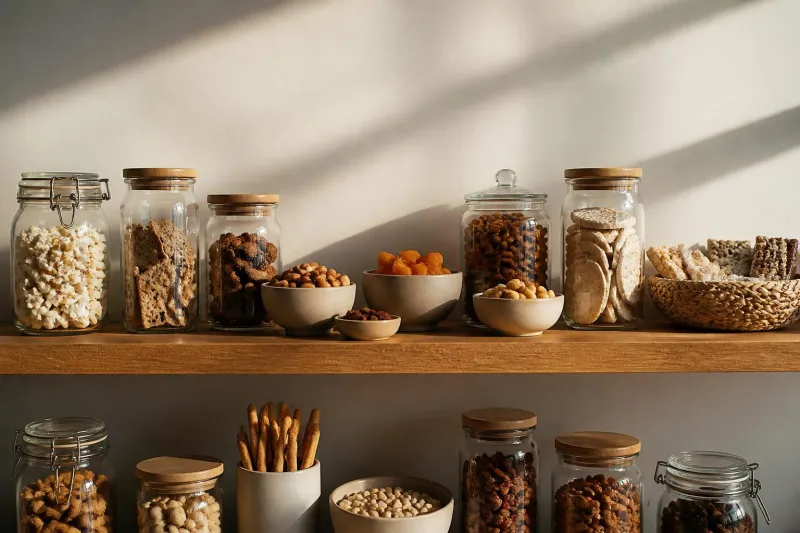
One, a visible cupboard section for shelf-stable snacks. This can include crackers, oatcakes, cereal bars, nuts where suitable for the household, popcorn, plain biscuits, or other packaged items you are happy to keep in rotation. The point is not that every item must be identical. The point is that people know where to look.
Two, a clear fridge area for chilled grab-and-go foods. That might include yoghurts, cheese, prepared fruit, hummus, cooked items that need using up, or sandwich fillings that can become a quick snack. Visibility matters. Food hidden at the back often becomes food forgotten.
Three, a bag or basket for immediate use items. This is useful for bananas, apples, easy-peel citrus, bread for toast, or anything that tends to be eaten first when someone comes in hungry and impatient.
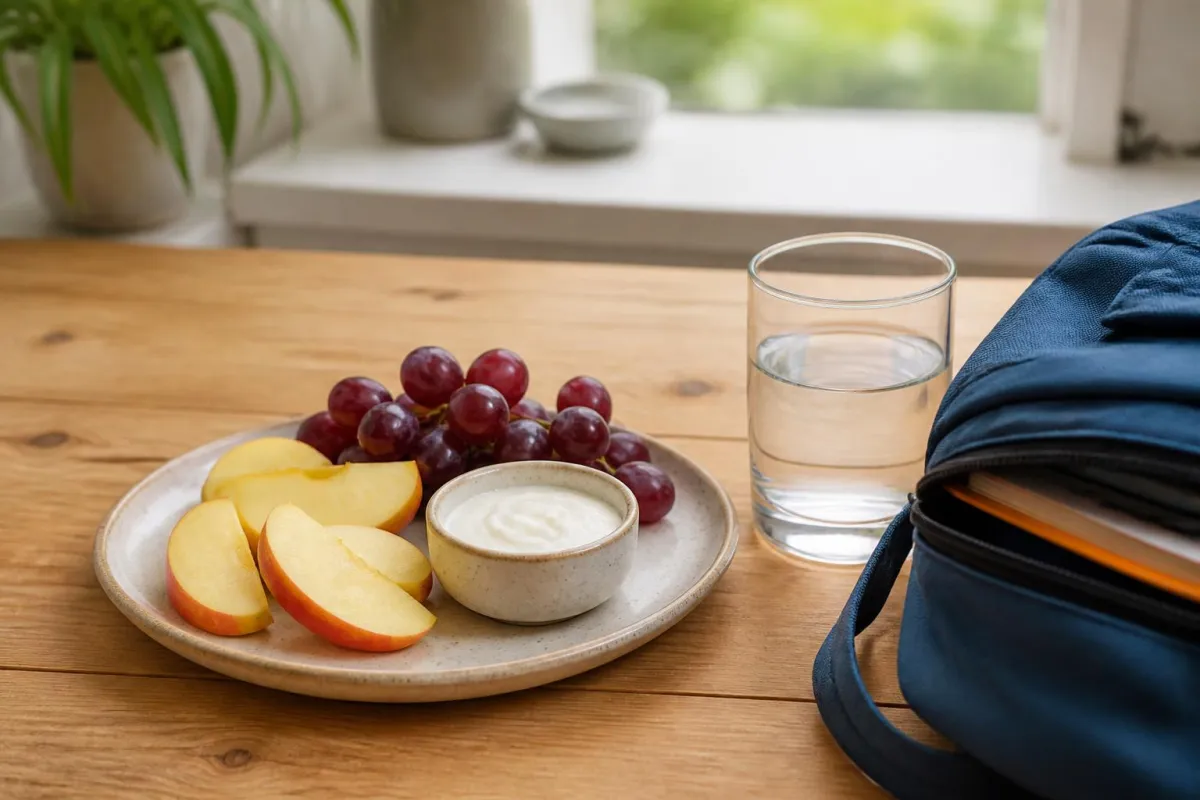
Another practical pattern is to combine one ready-to-eat item with one add-on. For example, crackers plus cheese, toast plus peanut butter where suitable, yoghurt plus fruit, or a cereal bar plus a drink. This can make a snack more satisfying without requiring a recipe. It also helps spread the household load across cupboard and fridge items rather than relying on one expensive or highly marketed category.
Planning also helps with timing. If dinner is late on certain days, it can make sense to expect a more substantial after-school snack on those days instead of pretending hunger will wait. If there is sport straight after school, a bag-friendly option may matter more than what looks best in a bowl at home. If one teenager is often home alone first, leave obvious options that do not require guesswork.
The NHS Eatwell Guide is useful here because it frames balance across a day or week rather than demanding perfection from every eating moment (NHS Eatwell Guide). In practice, that means you do not need every snack to carry the whole burden of dietary balance. What helps more is a household pattern where a range of foods are available over time.
This is also where adults can reduce last-minute grabbing without becoming food police. Decanting some foods into a reachable basket, keeping a backup loaf in the freezer, writing the use-by date on leftovers, or putting likely after-school options at eye level often does more than another lecture about better choices.
If your household tends to swing between sweet and savoury preferences, it can help to plan both rather than hoping one category will replace the other. Our guide to sweet snacks that satisfy without label guesswork may help with that side of the cupboard.
Storage, packed snacks and allergy checks
Practical snacking is not just about what you buy. It is also about whether food is stored properly, packed sensibly, and checked carefully for allergens.
For chilled foods, follow the storage instructions on the pack. The Food Standards Agency advises keeping chilled food properly cold and following product guidance on storage, freezing and use after opening (Food Standards Agency food storage guidance). That matters for yoghurts, cheese, cooked meats, dips, leftovers and prepared fruit. If something says keep refrigerated, do not assume it will be fine on the kitchen side all afternoon.
Use-by dates matter differently from best-before dates. In ordinary home use, that means perishable chilled foods need more care than dry cupboard items. If you are packing a snack for later rather than immediate eating at home, think about whether it will stay in a cool bag, whether it will sit in a warm classroom or car, and whether it is still the right choice once that time has passed.
For packed snacks, check whether the packet is genuinely one portion in practice or whether it is easy to overestimate or underestimate what will be eaten. A multipack can be useful for household organisation, but only if everyone understands whether each inner bag is the intended unit or whether the outer pack is likely to be left open and shared.
Shared household items need a bit of discipline as well. A jar of peanut butter, a tub of hummus, or an opened bag of crackers can look convenient, but they are only useful if someone closes them properly, uses clean utensils where needed, and notices when they have gone stale or passed their date.
On allergies, do not assume a snack is suitable because it looks plain, is sold in a children's format, or carries a broad claim on the front. The Food Standards Agency consumer allergy guidance is clear that ingredient and allergen information matters, and personal suitability should not be inferred from general packaging cues (Food Standards Agency consumer allergy guidance). In practice, that means checking the label every time you buy, because recipes and manufacturing information can change.
That point is especially important with bakery items, cereal bars, chocolate snacks, flavoured crisps, yoghurts, and products marketed as healthier alternatives. Nuts, sesame, milk, soya, wheat and other allergens can appear in places people do not expect. Cross-contact statements also need attention where relevant to the individual. We do not describe foods as safe for a person with an allergy, because that judgement depends on the exact product, the exact label, and the individual advice they follow.
For households with mixed needs, it can help to separate some snacks physically. A labelled shelf, basket or lunchbox section reduces mistakes and avoids the casual assumption that one version is the same as another.
Useful after-school snacks are usually the ones that survive ordinary life. They are easy to compare, easy to store, easy to find, and easy to fit into the wider pattern of meals and snacks across the week. That is less glamorous than a miracle list, but in most homes it is what actually works.