How to choose savoury snacks without label guesswork
Compare savoury snacks on the same basis: per 100g is not per serving.
On this page
- What makes a savoury snack a practical choice
- How to compare labels without mixing up the numbers
- Which parts of the label matter most for savoury snacks
- Ingredients
- Salt
- Fibre
- Protein
- Front-of-pack claims
- How to fit savoury snacks into a normal day
- What to check for work bags, desks and travel
- 1. Pack durability
- 2. Mess and ease of eating
- 3. Storage instructions
- 4. Opened versus unopened use
- 5. Temperature and timing
- When a label needs extra care
Choosing savoury snacks without label guesswork means comparing like with like, reading beyond the front of the pack, and judging the snack in the context of your actual day. A useful snack is not one that earns a moral label. It is one that fits where, when and why you are eating it, whether that is a desk drawer at 4pm, a train journey, or something to stop you arriving home ravenous.
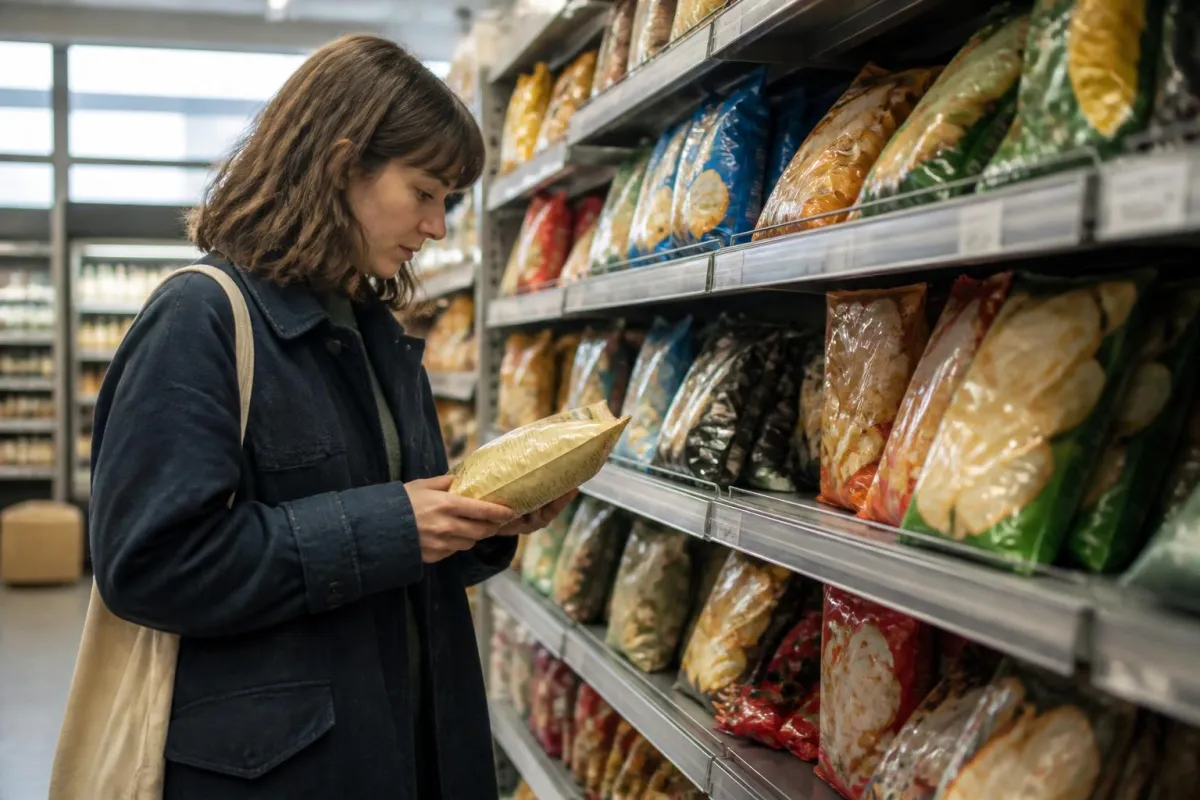
For most UK adults, the quickest way to make better sense of savory healthy snacks is to use the label in layers. Start with the pack size and the nutrition table. Check whether you are comparing foods per 100g or per serving. Then look at ingredients, salt, fibre and protein, and treat claims such as no added sugar or high protein as prompts to read more closely, not as the final answer. The NHS explains the difference between comparison bases clearly in its guide to using nutrition information on food labels.
What makes a savoury snack a practical choice
When we talk about savoury snacks on Healthy Snacking, we are not trying to sort foods into virtuous and non-virtuous camps. We are looking at what the label can tell you, what it cannot tell you, and how that helps with ordinary decisions.
A practical savoury snack usually does one or more of the following:
- travels well enough for the situation
- matches the time you have to eat it
- is easy to portion if that matters to you
- fits your storage options at home, work or on the move
- contributes something useful to your overall eating pattern, such as staying power, convenience or a way to bridge a long gap between meals
That last point matters. A bag of crackers, a pack of roasted pulses, a savoury oat bar, cheese biscuits, popcorn, nuts, or a packet of rice cakes may all look similar on a shelf because they occupy the same shopping category. On the label, and in real use, they can be quite different.
One may be lighter and easier to carry. Another may be much saltier. Another may have more fibre. Another may only look moderate until you notice that the packet contains several servings but is easily eaten in one sitting. None of that makes a food morally good or bad. It just changes whether it is a sensible choice for your context.
This is also why we avoid single-nutrient thinking. A snack is not automatically a strong choice because it is lower in sugar, nor automatically a weak one because it is more energy-dense per 100g. Savoury foods often need particular care around salt, packet size and ingredients, because those details can change the real comparison more than a front-of-pack slogan suggests.
If you want a broader starting point, our everyday snack guidance sets out the same practical approach across different snack types.
How to compare labels without mixing up the numbers
The most common label mistake is comparing one product per 100g with another per serving and treating them as if they mean the same thing. They do not.
The NHS uses both because they answer different questions. Per 100g helps you compare products directly, even when the packets are different sizes. Per serving helps you estimate what you might actually eat, if the stated serving is realistic for you and if you notice how many servings are in the pack. The NHS guide on how to read food labels explains this distinction, and it is one of the most useful habits to get right.
When you are standing in front of a shelf, use per 100g first. That gives you the clearest apples-with-apples comparison for salt, fibre, protein, fat and energy. If one savoury snack has much more salt per 100g than another, that is a meaningful difference.
Then switch to per serving and the actual packet size. This is where a lot of label confidence falls apart. A product may look modest per serving, but the serving may be smaller than what many adults would naturally eat. Equally, a small single pack may have less of something overall than a large sharing bag that looks similar on the front.
A few examples show why the order matters:
- Two crisp-style snacks may look close per serving, but one serving is 20g and the other is 40g.
- A nut and pulse mix may look high in energy per 100g, but the packet may be small and filling enough that the practical amount eaten is different from a larger, lighter snack.
- Crackers sold in a multi-pack may list one inner pack as a serving, while a larger outer bag of a similar product expects you to count portions yourself.
This is why we often suggest reading the packet in three passes:
- Check the pack weight.
- Compare nutrition per 100g.
- Check how many servings the manufacturer says are in the pack, then ask yourself what you would actually eat.
That final question is not a confession test. It is just realism. A label is only useful if it reflects the amount likely to end up being eaten.
Where rules differ, keep in mind that UK labelling now sits under UK rules rather than EU rules, although many products still look familiar because formats remain similar. For UK shoppers, the practical point is the same. Read the basis of comparison carefully on the actual pack in front of you.
If you want more examples focused on this category, our guide to comparing savoury lunch snacks without label mix-ups goes deeper into side-by-side comparisons.
Which parts of the label matter most for savoury snacks
Once you have the numbers on the same basis, the next step is deciding which parts deserve most attention. For savoury snacks, we would usually start with ingredients and salt, then look at fibre and protein, and only then at front-of-pack claims.
Ingredients
Ingredients tell you what the product is mainly made from, because they are listed in descending order by weight. That does not tell you everything about nutritional value, but it often gives a clearer first impression than the marketing on the front.
For example, a savoury baked snack may sound pulse-based on the front, but the ingredients can show whether pulse flour is the main ingredient or whether starches and refined flours do most of the work. A cracker marketed as seeded may contain some seeds without being mostly seeds. A cheese-flavoured snack may contain flavourings rather than much cheese.
This is not about purity. It is about understanding what you are buying.
Salt
Salt matters particularly in savoury snacks because many products in this category are built around flavour intensity and crunch. Two snacks that seem broadly similar can differ noticeably on salt per 100g.
That does not mean every lower-salt option is automatically better for every situation. It means salt is one of the clearest figures worth checking before habit takes over. If you eat savoury snacks regularly, small differences across the week can matter more than a single dramatic comparison.
Fibre
Fibre can help distinguish between snacks that otherwise look similar. Wholegrain crackers, roasted pulses, popcorn and some seed-based products may offer more fibre than more refined alternatives. But fibre should still be read alongside packet size and ingredients. A high-fibre claim on a small serving does not tell you much on its own.
Protein
Protein can be useful, especially if you want a snack with more staying power between meals. But a protein figure is not a quality stamp. Some savoury snacks are high in protein and also high in salt. Others have a moderate protein content but fit better in practice because they are easier to store, less messy, or more realistic for the situation.
We have covered this in more detail in our guide to choosing higher-protein snacks without label confusion.
Front-of-pack claims
Claims can be helpful shortcuts, but they are not substitutes for reading the full label.
Take no added sugar. On a savoury product, this can sound reassuring, but it does not tell you much unless sugar was a likely issue in the first place. It also does not tell you about salt, fibre, portion size or how processed the snack is. The same applies to terms such as baked, source of protein, high fibre, or gluten free. Each may be relevant, but none should be treated as the whole story.
A sensible reading order is:
- front-of-pack claim
- ingredients
- nutrition table per 100g
- nutrition table per serving
- number of servings in the packet
That sequence reduces the chance of being led by the slogan.
How to fit savoury snacks into a normal day
The NHS Eatwell Guide is useful here because it treats balance as something that develops over a day or week, not something every single snack must achieve on its own. That is a more realistic way to think about everyday eating for adults with work, travel and uneven schedules. See the NHS explanation of overall dietary balance in the Eatwell Guide.
In practice, that means a savoury snack does not need to be nutritionally perfect to be useful. It needs to make sense within your wider pattern.
A few ordinary examples:
- If lunch is late, a more substantial snack may be practical.
- If you already know dinner will be salty, you may prefer a snack with a lower salt figure.
- If your day involves long gaps between meals, fibre or protein may matter more than they would for a short errand.
- If you are eating at your desk, a less messy option may be more realistic than something crumbly or strongly scented.
This is why rigid snack rules often fail. They ignore context. A small packet of savoury biscuits alongside fruit later in the afternoon may fit your day better than chasing a supposedly ideal snack that you do not actually keep on hand. Equally, a roasted bean snack may look impressive on paper but be a poor fit if it is too noisy, messy or inconvenient for your workplace.
What helps most is building a short list of options for different situations:
- one for home
- one for work
- one for travel
- one for days when you need something more substantial
- one for days when you mainly need convenience
That approach usually works better than asking one snack to do every job.
What to check for work bags, desks and travel
A good label choice can still be a poor practical choice if the packet does not suit where you will keep it.
For work bags, desks and travel, we would check five things.
1. Pack durability
Will the packet survive being carried around? Fragile crackers, crisp breads and easily crushed snacks may be fine at home and irritating on the move. A sturdier packet or individually wrapped portions may be more practical if the snack spends hours in a bag.
2. Mess and ease of eating
Crumbs, oily fingers and strong odours matter more in shared spaces than they do in your kitchen. This is not a nutritional issue, but it is a real one. If a snack is awkward to eat discreetly, you may stop taking it with you, which makes the label comparison irrelevant.
3. Storage instructions
Always follow the storage instructions on the packet. Some savoury snacks are shelf-stable until opened, then need to be eaten promptly or resealed carefully. Others may need chilling. The Food Standards Agency guidance on safe chilling and food storage is the right reference point for general food safety principles, but the product instructions come first for that specific item.
We should be careful not to invent shelf-life rules. If a packet says keep refrigerated after opening, that matters. If it says store in a cool, dry place, that is the instruction to follow. Do not assume that a savoury snack is fine in a hot car, near a radiator, or loose in a bag simply because it is sold from an ambient shelf.
4. Opened versus unopened use
A snack that travels well unopened may not travel well once opened. Resealability matters if you are unlikely to finish the packet. This is especially relevant when the label presents a serving smaller than the full pack. If the packet is hard to reseal, the realistic serving may be the whole thing.
5. Temperature and timing
For commuting, day trips and office use, think about how long the snack will be out of its usual storage conditions. The Food Standards Agency guidance is about safe handling and chilling, not about giving a universal number for every product in every setting. So the practical rule is simple, follow the packet, keep chilled foods properly chilled where required, and do not make assumptions from the category name alone.
If travel is your main issue, our guide to shelf-stable snacks that travel well and read clearly on labels may help narrow the options.
When a label needs extra care
General label-reading advice has limits. Some situations need more than a quick scan of the nutrition table.
The clearest example is allergens. If you have a food allergy, or you are buying for someone who does, do not infer safety from the product type, the front-of-pack wording, or a general article like this one. Check the ingredients list and allergen information on the packet every time, because recipes and manufacturing information can change. The Food Standards Agency sets out this point clearly in its consumer allergy guidance.
The same caution applies to intolerance concerns and ambiguous claims. Phrases such as plant-based, dairy free style, natural flavouring, or gluten free may answer one question while leaving another unanswered. A snack can be suitable for one dietary preference and unsuitable for another. It is not safe to fill in the gaps by assumption.
A few situations where extra care is sensible:
- the product has a may contain statement relevant to your needs
- the ingredients list uses terms you do not recognise
- the claim on the front seems broader than the detail on the back
- the product category is one where recipes often change
- you are relying on memory from a previous purchase
For medical dietary needs, personal allergy management or condition-specific advice, packet information should be combined with appropriate professional advice. Healthy Snacking is an editorial publication by Fleeta Limited, not a clinic or individual advice service, so our role is to help you read the label more clearly, not to decide personal suitability.
The most reliable habit is also the simplest. Slow down for ten seconds and read the actual basis, ingredients and storage instructions on the actual pack. That is how you choose savoury snacks with less guesswork, and without turning everyday food into a moral test.