Build a shopping list that makes everyday eating easier
A useful shopping list starts with routine, storage and where food will actually be eaten.
On this page
- Start with where the food will be eaten
- What a practical healthy eating shopping list usually includes
- Fruit and vegetables
- Starchy foods and grains
- Beans, pulses, fish, eggs, meat, tofu, and other protein foods
- Dairy and alternatives
- Fats, spreads, and cooking basics
- Snack and bridge foods
- How to compare labels without getting misled
- Start with per 100g for comparisons
- Then check per serving against the actual packet
- Read the ingredients list as well as the numbers
- Treat front of pack claims carefully
- Choose formats you are likely to use
- Fresh
- Chilled
- Frozen
- Tinned and jarred
- Cupboard staples
- Build in options for busy days
- Portable options
- Low effort meal components
- Backup cupboard meals
- Workday extras
- A simple way to review and adjust your list each week
- Step 1, check what was actually used
- Step 2, note waste without turning it into guilt
- Step 3, replace by function, not by exact item
- Step 4, compare labels only when the choice is genuinely close
- Step 5, check storage and date issues
- Step 6, keep one note for next week
A shopping list works best when it reflects where you actually eat, not where you hope every meal will happen. If most weekdays involve breakfast at home, lunch at work, and something grabbed on the way back from the station, your list needs to support that pattern. A useful list is less about perfection and more about making ordinary choices easier.
That is why a practical healthy eating shopping list is usually built from routines, storage, and label checks. We can keep it flexible, avoid turning it into a strict meal plan, and still make it easier to buy food that fits real life. The NHS Eatwell Guide also frames dietary balance across the day or week, rather than demanding that every single item does everything at once (NHS Eatwell Guide).
Start with where the food will be eaten
Before writing categories, split the week into places. For many UK adults, that means home, work, and travel. Some people also need a separate line for food kept in the car, in a work bag, or at another household.
At home, think about what you will realistically prepare when you are tired. A list built only around ambitious cooking plans often leads to waste. It is more useful to note the meals and snacks you regularly reach for, then buy ingredients that support them in more than one way. Oats can cover breakfast and baking. Yoghurt might work for breakfast, snacks, or alongside fruit. Eggs can be used for quick meals, packed lunches, or simple suppers.
For work, think about what can be stored safely and carried easily. Desk lunches and snacks need a different kind of planning from food eaten straight from the fridge at home. If there is a fridge at work, that opens up options such as yoghurt, prepared veg, cooked grains, and leftovers. If there is not, shelf-stable options matter more, along with an insulated lunch bag if you use one.
For travel, be honest about friction. Food that needs cutlery, reheating, or careful balance in a crowded train carriage often gets left behind. Portable choices, things that can handle being in a bag for a few hours, and items that open easily are more likely to be used. This is one reason a healthy eating shopping list should include convenience foods that are there on purpose, not only as a fallback after the list has failed.
A simple way to start is to draw three short columns:
- Home
- Work
- Travel
Under each one, write what you actually eat in a normal week, not an ideal one. Then circle the items that repeat. Those repeats are the backbone of the list.
If you want a broader reset without strict rules, our guide to healthy eating that works on ordinary weekdays sets out the same principle in day to day terms.
What a practical healthy eating shopping list usually includes
For a normal adult household, the list usually works best when it covers broad categories rather than prescribing every meal. That keeps enough structure to be useful without turning shopping into a compliance exercise.
A practical list often includes:
Fruit and vegetables
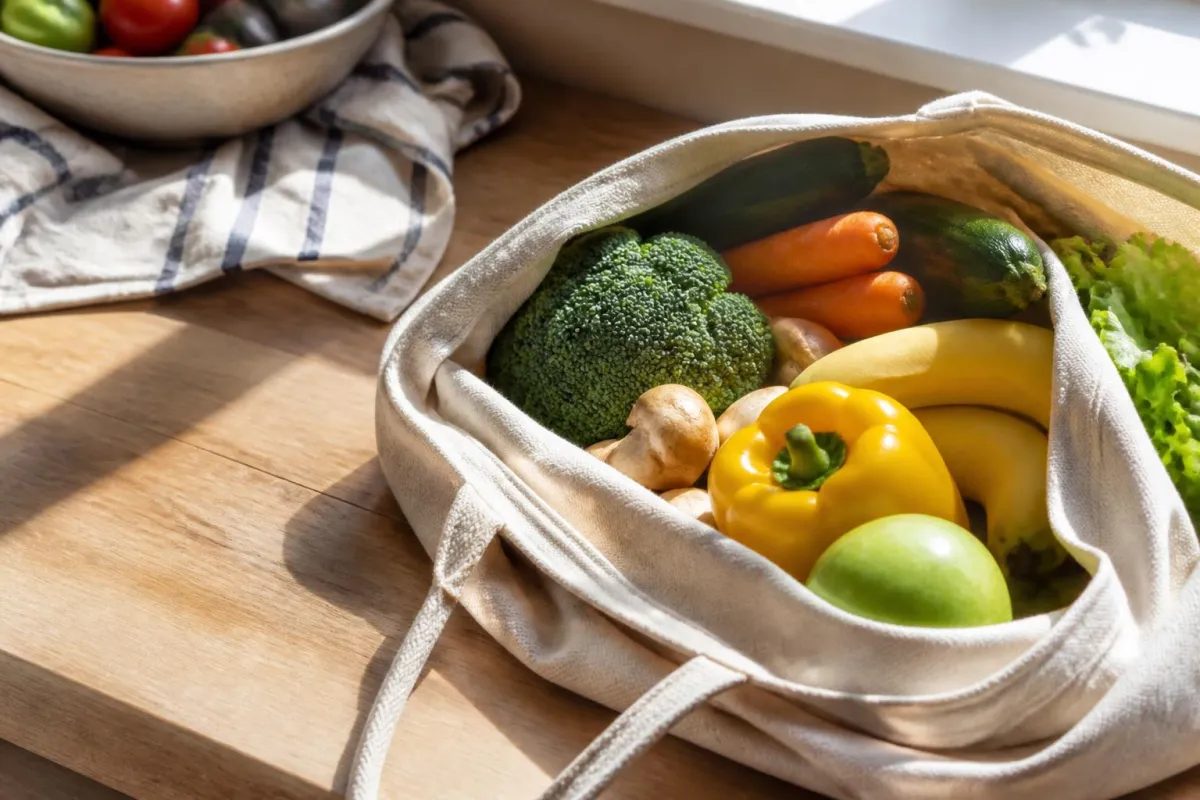
Fresh, frozen, tinned, and chilled all have a place. The point is to have options you will use. That may mean bananas and apples for portability, salad vegetables for quick lunches, frozen peas for low effort dinners, and tinned tomatoes for cupboard meals.
Try to include a mix of:
- Grab-and-go fruit
- Vegetables for cooking
- Ready-to-use options for busy days
- Longer-lasting backups such as frozen or tinned items
Starchy foods and grains
These help form ordinary meals and can make snacks more substantial when needed. Depending on the household, this might include bread, wraps, oats, rice, pasta, potatoes, crackers, or cereal.
Choose the forms you actually use. A loaf that goes stale every week is less practical than wraps or a smaller sliced loaf that freezes well.
Beans, pulses, fish, eggs, meat, tofu, and other protein foods
This category supports lunches, evening meals, and some snacks. It may include tinned beans, lentils, eggs, yoghurt, fish, chicken, tofu, or other familiar staples. Tinned pulses are especially useful because they require little preparation and can be added to soups, salads, wraps, and grain bowls.
Dairy and alternatives
Milk, yoghurt, cheese, and fortified alternatives often appear on a practical list because they are easy to use across the week. If you buy alternatives, check the label rather than assuming they are all nutritionally similar.
Fats, spreads, and cooking basics
Oils, spreads, herbs, spices, stock, vinegars, and condiments often decide whether simple ingredients turn into meals. A list that forgets these can look healthy on paper but still leave you ordering takeaway because nothing feels finished.
Snack and bridge foods
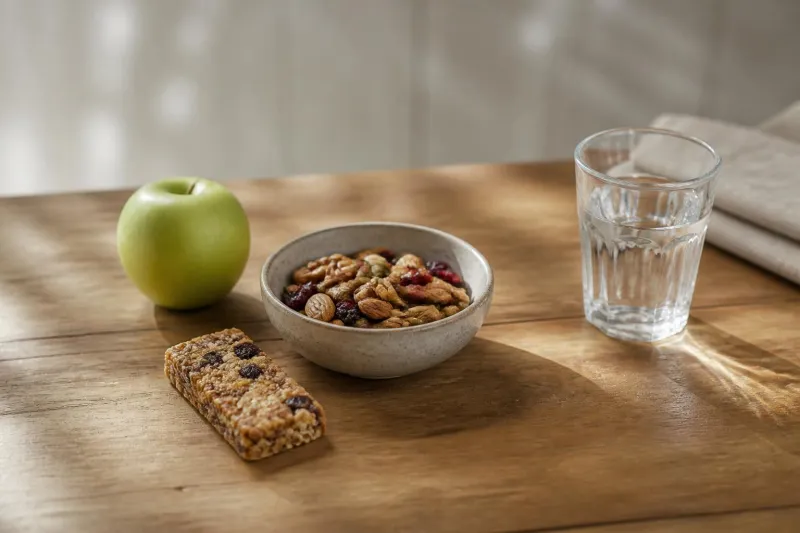
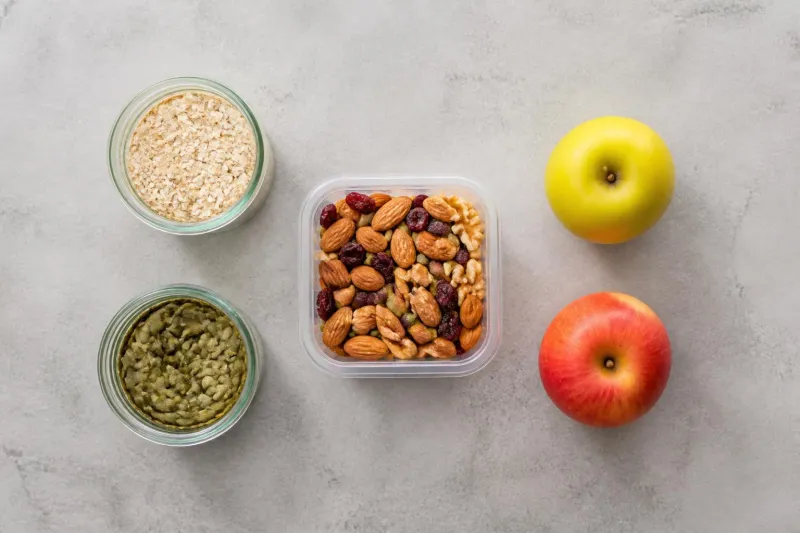
These are foods that fill the gap between meals, commute delays, or late meetings. They are not a failure of planning. They are part of planning. This category might include fruit, yoghurt, oatcakes, nuts, crackers, hummus, popcorn, or cereal bars, depending on what you actually use.
We have written separately about eating well for less without overthinking every snack, because this part of the list is often where budgets and good intentions collide.
The aim is not to make every trolley look virtuous. It is to make sure the household has enough ordinary food to support ordinary days.
How to compare labels without getting misled
When you are choosing between similar products, the label can help, but only if you compare like with like. The NHS advises using nutrition information to compare foods and notes that per 100g and per serving are different bases (NHS food labels guidance).
Start with per 100g for comparisons
If you are deciding between two cereals, two yoghurts, or two soups, per 100g is often the clearest way to compare them. It puts products on the same footing, even when manufacturers choose different serving sizes.
This matters because per serving can look neat while hiding how small or large that serving is meant to be. One packet may define a serving in a way that does not match what most adults actually eat. Another may list nutrition for half a pot or a small handful that nobody measures in real life.
Use per 100g when:
- Comparing similar foods across brands
- Checking sugar, salt, fibre, or fat in a consistent way
- Trying to spot whether a difference is meaningful or mostly packaging
Then check per serving against the actual packet
Per serving is still useful, but only after you have checked what the serving means. Is it one biscuit, half a pouch, 30g of cereal, or the whole container? If a pot looks like a single item but the label counts two servings, that changes the picture.
This is not about catching brands out. It is about understanding what the numbers mean in practice.
Read the ingredients list as well as the numbers
Nutrition panels tell you quantities. Ingredients lists tell you what the product is made from, in descending order by weight at the point of manufacture. If you are comparing two similar items, this can explain why one behaves differently on the nutrition panel.
For example:
- A cereal with wholegrain oats listed first may be different in feel and use from one where sugar appears near the top.
- A soup with vegetables and pulses high on the list may be more in line with what you expected than one based mainly on water, starches, and flavourings.
- A yoghurt product with fruit low down the list may be less fruity than the front of pack suggests.
Treat front of pack claims carefully
Claims such as no added sugar can be true and still create a misleading impression if read too quickly. No added sugar does not necessarily mean low in sugar overall. The product may still contain sugars that are naturally present in fruit, milk, or juice concentrates. It also does not tell you everything about portion size, fibre, or how filling the item is.
The same caution applies to terms such as high protein, source of fibre, or baked not fried. A single claim highlights one feature. It does not summarise the whole product.
For anyone managing allergies or intolerances, ingredient and allergen information matters more than broad health claims. The Food Standards Agency’s consumer guidance is the relevant UK starting point here (Food Standards Agency consumer allergy guidance). We do not treat a general article as a judgement on personal suitability.
Choose formats you are likely to use
A sensible list is not only about what to buy, but in what form. Fresh, chilled, frozen, tinned, and cupboard foods each solve different problems.
Fresh
Fresh produce can be excellent for flavour, texture, and flexibility, but it usually needs faster use and better timing. Buy fresh when you know when it will be eaten, or when it can serve several meals in quick succession.
Good candidates include:
- Salad leaves for the first part of the week
- Bananas, berries, or soft fruit you know will be eaten soon
- Fresh herbs if they will be used in more than one dish
Chilled
Chilled foods often reduce prep time. Think prepared veg, hummus, cooked grains, yoghurt, or ready to eat protein options. They can be useful for work lunches and busy evenings, but check use-by dates and storage instructions.
Frozen
Frozen foods are often the easiest way to cut waste. They are useful when plans change, when household size is small, or when you want a backup for nights when fresh food has run out. Frozen vegetables, fruit, fish, and some grains can all be practical.
Do not assume frozen is always nutritionally identical to fresh in every case, or automatically better value in every shop. The advantage is often convenience and reduced waste, not a universal rule.
Tinned and jarred
Tinned tomatoes, beans, pulses, sweetcorn, and fish can make a list much more resilient. They are especially helpful for people who shop less often or need cupboard options for schedule changes.
Check whether a product is in brine, syrup, oil, or sauce, depending on what you want it for. That affects both flavour and the label comparison.
Cupboard staples
These are the quiet part of the list that often keeps the week together. Oats, pasta, rice, crackers, nut butter, seeds, cereal, and long-life milk or alternatives can all help bridge the gap between a plan and real life.
Storage matters here. The Food Standards Agency advises following product instructions for chilling, freezing, and defrosting food safely (Food Standards Agency food storage guidance). In the UK, use-by dates are about safety, while best before is about quality. That distinction is often misunderstood.
Where UK and EU practice appear similar on labels and dates, the practical point for readers is still the same, follow the product instructions and do not improvise with storage times.
Build in options for busy days
A list becomes much more useful when it includes food for the days that go wrong. Late trains, meetings that overrun, forgotten lunches, and evenings with no energy are normal.
This is where people often either overbuy aspirational ingredients or give up and rely entirely on whatever is nearest. A better approach is to build a small layer of low-effort options into the weekly shop.
Useful categories include:
Portable options
These are easy to carry and easy to eat without much setup. Depending on the person, that might mean:
- Whole fruit
- Small pots of yoghurt if there is access to a fridge
- Crackers or oatcakes
- Nuts and seeds
- Sandwich ingredients that can be assembled quickly
- Shelf-stable snacks kept in a work bag
If nuts are part of your routine, our piece on whether nuts are a healthy snack for everyday eating covers where they can fit, without treating them as a magic food.
Low effort meal components
These are not full meal plans. They are components that let you put something together quickly:
- Bagged salad plus a protein option
- Microwaveable grains plus tinned beans
- Soup plus bread
- Eggs plus toast and veg
- Frozen veg added to noodles, rice, or pasta
Backup cupboard meals
Every list benefits from two or three combinations that can be made almost without thought. For example:
- Pasta, tinned tomatoes, and beans
- Rice, frozen veg, and eggs
- Crackers, cheese, fruit, and a prepared veg option
These combinations are not nutritionally perfect in isolation, and they do not need to be. The NHS Eatwell Guide looks at overall pattern across time, not one emergency supper.
Workday extras
For office days or travel days, it can help to keep a small reserve where you actually need it. That might be a desk drawer, locker, or bag pocket. Choose items with packaging and storage conditions that suit that setting, and rotate them so they get used before quality drops.
A simple way to review and adjust your list each week
A shopping list improves faster when you treat it as a repeatable tool rather than a one-off plan. The easiest review takes about ten minutes.
Step 1, check what was actually used
Before writing the next list, look through the fridge, freezer, fruit bowl, and cupboards. Ask:
- What did we finish?
- What did we reach for first?
- What sat there untouched?
This gives you real evidence from your own week, which is more useful than a generic ideal.
Step 2, note waste without turning it into guilt
If salad leaves, soft fruit, or bread keep being thrown away, that is not a moral failure. It usually means the format, quantity, or timing is wrong. Buy less, switch to frozen, or choose a longer-lasting alternative.
Step 3, replace by function, not by exact item
If you ran out of easy work snacks, the answer may not be to buy the same bar again. The function was “portable and quick”. Another food could meet that better. Thinking in functions avoids getting stuck in rigid habits.
Step 4, compare labels only when the choice is genuinely close
Not every purchase needs a deep label investigation. Save the effort for products that are similar enough for the choice to matter, such as two cereals, two soups, or two snack bars. Then use per 100g first, check per serving second, and read the ingredients list.
Step 5, check storage and date issues
Use-by dates matter for safety. Best before dates are about quality. Follow package instructions for chilling, freezing, and once-opened use, in line with Food Standards Agency guidance. If you regularly miss use-by dates, buy smaller packs or switch some items to frozen or cupboard versions.
Step 6, keep one note for next week
A short note on your phone is enough:
- Buy less salad
- Need more portable fruit
- Keep tinned beans in reserve
- Better yoghurt for work fridge
- Frozen veg worked well
That note becomes the basis of the next list.
A healthy eating shopping list does not need to look impressive. It needs to match your week, help you compare labels sensibly, and leave enough flexibility for real life. At Healthy Snacking, published by Fleeta Limited, we think that is usually what makes everyday eating easier: less performance, more practicality.