How to choose dessert-style snacks without label confusion
Dessert-style snacks can fit ordinary eating patterns without needing special rules.
On this page
- What counts as a dessert-style snack
- How to compare labels without mixing up the numbers
- What front-of-pack claims can and cannot tell you
- How to fit sweeter snacks into an ordinary week
- Practical choices for home, work and travel
- When ingredients and allergen information matter more than the headline claim
Choosing dessert-style snacks gets easier once you stop treating the front of the pack as the whole story. In practice, the useful questions are simple. What kind of snack is it, how much are you likely to eat, what do the numbers mean on this packet, and does it actually suit your routine, storage options and any dietary needs you have?
At Healthy Snacking, we focus on label reading and everyday use because that is where most confusion starts. People are not usually stuck on whether a yoghurt pouch, cereal bar or chocolate-coated rice cake is “allowed”. They are trying to compare products that look similar, but present their information in different ways. If you want to choose healthier dessert snacks without guesswork, the job is to read the packet in the right order.
What counts as a dessert-style snack
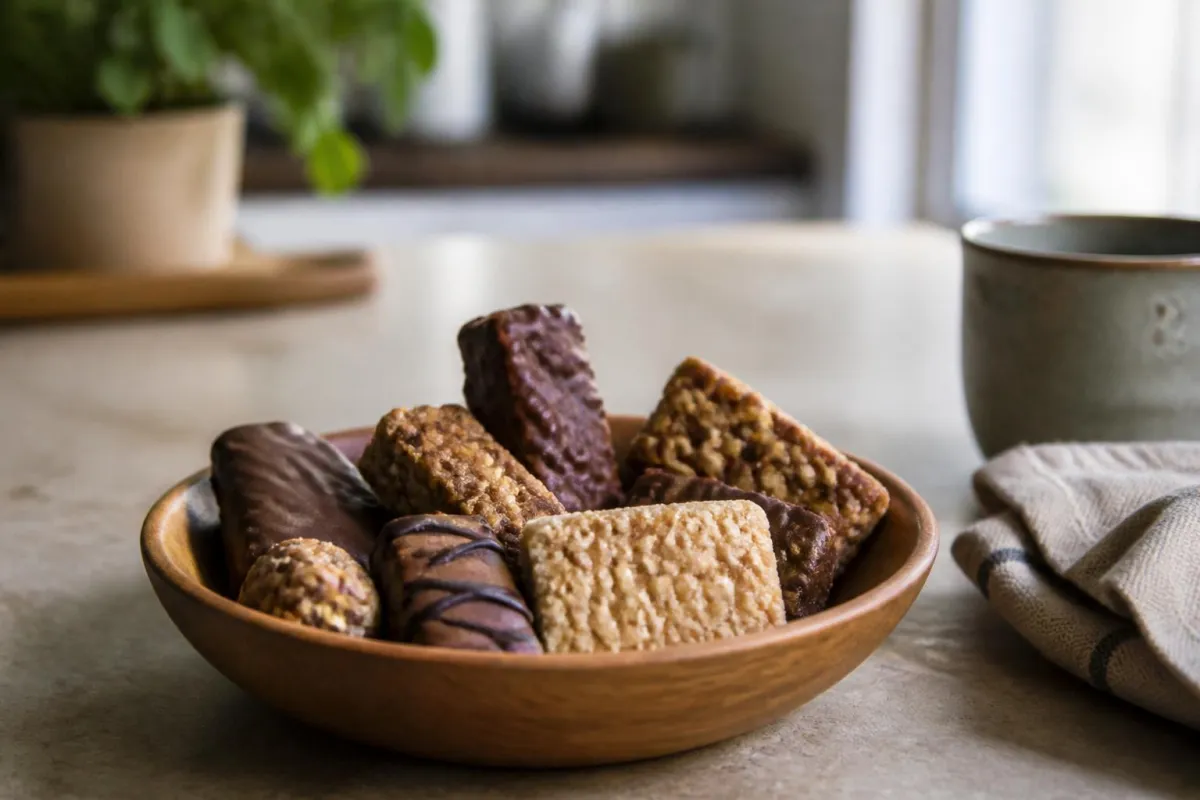
A dessert-style snack is any snack chosen mainly for a sweet taste or pudding-like feel, rather than as a meal. In UK shops, that can include flavoured yoghurts, chilled dairy desserts, mousse pots, cereal or oat bars, fruit bars, flapjacks, biscuits, chocolate-covered items, protein puddings, sweet popcorn, snack-size cakes, dried fruit mixes and similar products.
That category is practical rather than moral. It does not mean a food is “bad”, nor does it mean it must be eaten only as a treat. It just helps us compare like with like. A pot of chocolate yoghurt, a slice of banana loaf in a lunchbox and a high-protein pudding all sit in roughly the same real-life decision: “I want something sweet between meals or after lunch. Which label tells me what I need to know?”
That is why we do not sort foods into virtuous and guilty camps. The more useful distinction is between products that are easy to understand and products that create label confusion. A dessert-style snack may be convenient, filling, messy, shelf-stable, chilled, individually wrapped, easy to overeat, or easy to portion. Those practical differences often matter more than the marketing language on the front.
It also helps to separate the food category from your eating pattern. A sweet snack can fit into an ordinary week without needing a grand theory about “clean” eating. If you want a broader starting point, our everyday snack guidance sets out the same label-first approach across different snack types.
How to compare labels without mixing up the numbers
The most common mistake is comparing one product by per 100g and another by per serving as if they were the same thing. They are not.
Per 100g is the standard basis for comparing similar foods across brands and pack sizes. It lets you line up two cereal bars, two puddings or two yoghurts even when one pack is much larger than the other. The NHS explains that nutrition information can be shown both per portion and per 100g, and that these are different comparison bases, each useful for a different purpose, how to read food labels.
Per serving matters because it tells you what you are likely to consume in one go, but only if the serving reflects real use. Sometimes it does. A single wrapped bar is straightforward. One pot equals one serving. A twin-pack of biscuits or a large dessert pot that says “2 servings” may be less realistic if most people eat the whole thing.
A practical way to compare labels is this:
- Start with per 100g when choosing between similar products.
- Then check per serving to see what your actual snack would amount to.
- Confirm the serving size in grams or millilitres, not just the word “serving”.
- Check how many servings are in the pack.
This matters because dessert-style snacks vary hugely in size. A small yoghurt pot and a large chilled dessert may look equally “single serve” on the shelf. Their front-of-pack claims may also look equally reassuring. But if one serving is 90g and the other is 200g, the real intake can differ a lot even when the per 100g figures look similar.
The same applies to bars and baked snacks. A bar marketed as light may simply be small. That does not make it a poor choice, but it means you should know whether you are comparing a modest portion with a larger one. Per 100g helps you see concentration. Per serving helps you see likely intake.
Traffic light colours can also help, especially for fat, saturates, sugars and salt, but they still need context. If a product is very small, the per serving traffic light may look modest while the per 100g figures are more concentrated. If a serving is unusually large, the reverse can happen. Neither figure is “more true”. They answer different questions.
When people say they want healthier dessert snacks, they often mean snacks that are easier to compare honestly. That usually means reading beyond the front panel and checking the nutrition table in full.
What front-of-pack claims can and cannot tell you
Front-of-pack claims are shortcuts. Some are useful, but none of them replaces the ingredients list and nutrition panel.
Take no added sugar. In UK use, this tells you sugar has not been added as an ingredient, but it does not mean the product is sugar-free, low in sugar, or automatically lower in energy. A snack made mainly from fruit purée or dried fruit may still contain a substantial amount of sugars naturally present in those ingredients. If you are comparing two sweet snacks, no added sugar is one clue, not the verdict.
High protein can also be helpful, especially if you want a snack that feels more substantial. But the claim alone does not tell you the whole picture. A high-protein dessert pot may also be large, heavily sweetened, or more expensive for what it is. A protein bar may be convenient for travel but still worth checking for saturates, fibre, and whether the texture and portion actually suit you.
Source of fibre is similar. It can point you towards a more filling option, but it does not tell you whether the product is high in sugars, small in portion, or mainly a sweet biscuit with added fibre ingredients.
The ingredients list adds context that claims cannot. It tells you what the product is mostly made from, because ingredients are listed in descending order by weight. If the first few ingredients are sugar, syrups or chocolate coating, that is useful to know. If oats, milk, nuts or fruit come first, that also helps you understand the product better. Neither fact makes the snack morally better or worse, but it does make the label less mysterious.
This is also where products sold on a “health halo” can become clearer. A flapjack with wholegrain oats may still be a dense, sweet baked bar. A yoghurt-coated fruit snack may contain only a small amount of fruit. A protein cookie is still a cookie-shaped sweet baked product, not a different species of food.
Claims are best used as filters, not conclusions. If you want more examples of reading sweet labels this way, our guide to sweet snacks that satisfy without label guesswork goes into similar comparisons.
How to fit sweeter snacks into an ordinary week
A useful rule from the NHS Eatwell Guide is that balance is considered over a day or a week, not demanded from every single item, the Eatwell Guide. That matters because people often expect one snack to prove too much. They want it to be convenient, cheap, satisfying, high in protein, high in fibre, low in sugars, neat to carry, shelf-stable and somehow identical to a homemade option. Real food shopping is rarely that tidy.
In ordinary life, a sweeter snack may do one or two jobs well. It might be portable and predictable for commuting. It might be a chilled dessert pot that makes a packed lunch feel finished. It might be a biscuit portion you genuinely enjoy with tea at work. The question is not whether every snack must meet every ideal. The question is whether your overall pattern works for you.
That means looking at rhythm as much as nutrients. If your week already includes several sweet grab-and-go items because your mornings are rushed, you may prefer plainer options at home in the evening. If you travel often and rely on shelf-stable snacks, you may keep chilled options for office days. If you know you tend to buy whatever is nearest when hungry, organising a few planned choices usually helps more than setting strict rules.
This is also where “better” can mean different things. For one person, a better dessert-style snack is one with a clearer portion size. For another, it is one that survives a train journey without melting. For someone else, it may be one that keeps well in a work fridge and is easy to eat between meetings.
There is no need to force every sweet snack into the role of a nutritionally complete mini-meal. It is enough to understand what it contributes and where it fits.
Practical choices for home, work and travel
A practical system is more useful than a perfect list. We suggest choosing dessert-style snacks by setting, because storage and convenience often decide what you will actually eat.
For home, keep a short mix of chilled, cupboard and freezer-friendly options if you use them. Chilled items might include yoghurts or dairy desserts. Cupboard options might include bars, plain biscuits, oat-based snacks or dried fruit and nut mixes. If you freeze items, check the packet first rather than assuming every product freezes well. The Food Standards Agency advises keeping chilled food properly cold, freezing suitable foods promptly where relevant, and following product instructions for storage and defrosting, food storage guidance.
At work, choose snacks that match the facilities you really have, not the ones you wish you had. If there is a reliable fridge, chilled pots can work well. If the office fridge is crowded or unpredictable, shelf-stable options may be simpler. If food often sits in a desk drawer for days, check best-before dates and pack condition regularly. Opened packs are a separate issue from unopened ones, and many products need to be eaten within a shorter period once opened.
For travel, favour products that tolerate temperature changes and handling. A yoghurt-covered bar in summer, or a chilled pudding without a spoon, may be more trouble than it is worth. Single-portion wrapped items can reduce mess and make the per serving figure more meaningful in real life. If you are carrying food for several hours, especially chilled products, check the storage instructions and use an insulated bag where appropriate.
A simple framework for adult households and workplaces is:
- Pick two or three dessert-style snacks that store differently.
- Keep one option that is genuinely shelf-stable.
- Keep one option with a clear built-in portion.
- Check whether a product needs refrigeration before opening, after opening, or both.
- Do not assume a multipack means each inner item is nutritionally identical to a larger standalone version.
- Review what actually gets eaten before the date mark or once opened.
This is also where pack size can mislead. A large bag of sweet popcorn may appear modest per serving, but if the serving size is much smaller than what people usually eat while working or travelling, the useful number is the amount you are actually likely to finish. The packet does not know whether you stop halfway.
If you want a similar method for other categories, our guide to how to choose savoury snacks without label guesswork uses the same comparison approach.
When ingredients and allergen information matter more than the headline claim
For some readers, the most important part of the label is not the nutrition table at all. It is the ingredients and allergen information.
A general claim like no added sugar, high protein or source of fibre does not tell you whether a food is suitable for your own dietary needs. The Food Standards Agency advises consumers to check ingredients and allergen information carefully and not rely on general impressions from packaging, consumer allergy guidance.
That matters with dessert-style snacks because they often contain common allergens or ingredients people overlook. Examples include milk powders in coated snacks, nuts in cereal bars, soya in chocolate products, wheat in biscuits and cakes, and gelatine or other ingredients that some people avoid. Flavour names can also distract from the basics. A “salted caramel” bar may be mainly a cereal bar with milk and soya. A “fruit and yoghurt” bite may contain little yoghurt but still include milk ingredients.
In the UK, allergen information must be clear, but readers still need to check the actual packet each time, especially if recipes or manufacturing arrangements change. Where rules differ between the UK and the EU generally, packaging can look similar while details still vary, particularly on products bought while travelling or from mixed retail sources. That is another reason not to rely on memory or on a headline claim alone.
It is also worth separating preference from suitability. A product marketed as “lighter”, “plant-based”, “natural” or “protein-packed” is not automatically suitable for someone with an allergy or intolerance, and it is not automatically aligned with a personal dietary pattern. Only the ingredients list and allergen information can answer that properly.
For readers comparing sweeter products specifically, our article on how to choose lower-sugar snacks without label guesswork may be a useful next step, especially if sugar-related claims are the main source of confusion.
The simplest way to avoid label confusion is to read dessert-style snacks in a fixed order. First, identify the type of snack. Second, compare per 100g if you are choosing between similar products. Third, check per serving against the portion you will really eat. Fourth, use front-of-pack claims as clues, not conclusions. Fifth, confirm storage, ingredients and allergen details on the actual pack.
That approach is less dramatic than food rules, but it is more reliable. And for most UK adults choosing snacks at home, at work and on the move, reliability is what makes the decision easier.