How to choose 100-calorie snacks without label confusion
A 100-calorie snack is a label-based idea, not a rule for every snack.
On this page
Choosing snacks around 100 calories can be useful, but it only works if you read the label base properly. A 100 calorie snack is not automatically healthier, and it is not a personal target that everyone should aim for. It is simply a rough organising point that some people find handy when comparing packets or planning what to take to work, keep at home, or carry while travelling.
The main source of confusion is that UK labels usually show more than one set of numbers. Calories may be listed per 100g and per serving, and those are not interchangeable. If you want a clear comparison, start by checking what basis the number uses, then look at the actual pack size you are likely to eat. The NHS advises using nutrition information to compare foods, while also keeping overall diet balance in view rather than expecting every single snack to do everything at once NHS food labels and NHS Eatwell Guide.
What a 100-calorie snack actually means
A 100 calorie snack is best treated as a practical category, not a verdict on whether a food is healthy. It can help narrow down options when you are standing in front of a vending machine, packing a desk drawer, or comparing two packets that look similar. It gives you a rough size point.
What it does not do is tell you the whole nutritional story. Two snacks can both come in at about 100 calories and still differ a lot in fibre, protein, saturated fat, sugars, salt, ingredients, and how filling they feel in real life. A small sweet biscuit pack and a piece of fruit with a spoonful of peanut butter might land in a similar calorie range, but they are not nutritionally interchangeable in every context.
It also does not mean 100 calories is the right amount for everyone, every time. People eat snacks for different reasons. Sometimes it is convenience between meetings. Sometimes it is because lunch will be late. Sometimes it is because you are on a train and need something shelf-stable. The amount that feels useful to one person may feel too little, too much, or simply irrelevant to another.
That matters because broader UK guidance does not ask you to optimise every snack in isolation. The NHS Eatwell Guide is about the overall balance of your diet across the day or week, not about making each individual item fit a strict number NHS Eatwell Guide. So if you use the idea of healthy 100 calorie snacks, it helps to keep the phrase in proportion. It is a planning tool, not a guarantee and not a rule.
At Healthy Snacking, that is the distinction we keep coming back to. Labels can help you organise food choices. They cannot, on their own, tell you what your whole eating pattern looks like.
How to compare labels without mixing up the numbers
Most packaged foods sold in the UK show energy in kilojoules and kilocalories, usually written as kJ and kcal. In everyday speech, people usually say calories, but on the label you may see kcal. That is the number most people mean when they say a snack has 100 calories.
The next thing to check is the basis for the number. On UK labels, calories are commonly shown per 100g and per serving. These are useful in different ways.
Per 100g is the standard comparison base. If you are comparing similar foods, such as two cereal bars, two popcorn bags, or two pots of yoghurt, per 100g lets you compare them like for like. It removes the brand’s chosen portion from the equation. The NHS specifically notes that a portion and 100g are different comparison bases, and that this difference matters when reading food labels NHS food labels.
Per serving can be helpful, but only if the serving reflects what you will actually eat. Sometimes it does. A single small bag, a single pot, or an individually wrapped bar may genuinely be one serving in practice. Sometimes it does not. A packet may state that it contains two servings, but many people will eat the whole thing. In that case, the per serving number can understate what ends up happening.
That is why the actual pack size matters so much. A snack might look as though it is around 100 calories because the front of pack highlights one portion, but the full packet may contain much more. Equally, a food that looks high per 100g may still come to around 100 calories if the actual portion is small, such as a measured spoonful of nuts or seeds.
A simple way to avoid confusion is this:
- Find the kcal figure.
- Check whether it is per 100g or per serving.
- Check the weight of the pack or portion you are likely to eat.
- If needed, work out the calories for the amount you will actually have.
If a pack contains 30g and the label says 400 kcal per 100g, then the whole pack is not 400 calories. It is 30 per cent of that figure. If a pack contains 60g and the label says 95 kcal per serving with two servings per pack, the whole pack is closer to 190 calories if you eat it all.
This is where people often get caught out. They compare one snack by per 100g and another by per serving, then assume the lower number means the better choice. It may simply mean the portions were defined differently.
There is also a UK specific point worth keeping in mind. Labelling rules in Great Britain and Northern Ireland are not identical in every regulatory detail to the EU generally, especially after Brexit, but the practical nutrition panel format that shoppers see remains very similar for everyday use. For this article, the important part is unchanged: you still need to distinguish per 100g from per serving and check the actual packet.
If you want more examples of label reading in everyday situations, our guide to movie night snacks that are easier to compare on labels uses the same basic method.
What to check besides calories
Calories matter if your aim is to find snacks that land around a certain range, but they are not the only detail worth reading.
Fibre is useful to notice because many adults want more of it in their overall diet. A snack with some fibre may feel more substantial than one with very little, although that is not a guaranteed effect and it is not the only thing that matters. Wholegrain crackers, fruit, pulses in roasted snack form, and some oat-based snacks may offer more fibre than sweets or refined baked snacks, but the label will tell you more than assumptions will.
Protein can also be relevant, especially if you want a snack that feels a bit more sustaining between meals. Yoghurt, edamame, roasted chickpeas, nuts, seeds, and some cheese portions may contribute protein, but again the amount varies a lot by product and portion. It is better to read the panel than to rely on category stereotypes.
Saturated fat is worth checking because two foods with similar calories can differ quite a bit here. That does not make one food morally good and the other bad. It simply gives more context, especially if you are comparing several packaged snacks that all seem similar at first glance.
Sugars need a little care. A higher sugar figure is not always a sign that a snack is less suitable. Plain dried fruit and sweetened confectionery can both show sugars, but they are not the same thing in ingredient terms or eating context. The phrase no added sugar can also be misunderstood. It does not mean sugar-free, and it does not guarantee low calories. It means sugars have not been added as an ingredient, but naturally occurring sugars may still be present. If you want a clearer explanation of that point, we have a guide on how to compare no added sugar snacks without guesswork.
Salt is another useful check, particularly for savoury snacks. Crisps, crackers, popcorn, roasted pulse snacks, and nuts can vary a lot. If you are choosing between similar products for regular use, salt may be one of the more practical tie-breakers.
Ingredients also matter. A short ingredients list is not automatically better, and a longer one is not automatically worse. What matters is whether the product is what you think it is, and whether the ingredients fit the kind of snack you actually want. If you have allergies or intolerances, ingredient and allergen information is essential. The Food Standards Agency advises consumers to rely on the provided allergen and ingredient information rather than assumptions about a food category Food Standards Agency consumer allergy guidance.
So when you compare healthy 100 calorie snacks, think in layers. Calories can help you shortlist. Fibre, protein, saturated fat, sugars, salt, and ingredients help you understand what you are actually choosing.
Practical snack examples that can land around 100 calories
The examples below are not fixed values. They are ordinary UK snack ideas that may come in at about 100 calories depending on portion size, recipe, and packet weight. The important part is to check the actual label or weigh the portion if you need precision.
A small banana can be around this range, while a larger one may be well above it.
An apple can also land around this point, depending on size. Smaller apples may be near it, larger ones may not be.
A single-serve plain yoghurt pot may come in around 100 calories, but flavoured versions can differ a lot.
A measured portion of nuts, such as a small handful, may be around 100 calories, but nuts are energy-dense, so small changes in weight make a noticeable difference. We cover the wider context in our piece on nuts in an overall eating pattern.
A couple of oatcakes with a thin spread, or a few wholegrain crackers, may land around that level depending on the product and topping.
A mini pot of hummus with a modest amount of vegetable sticks can be around 100 calories, but the balance between dip and veg matters.
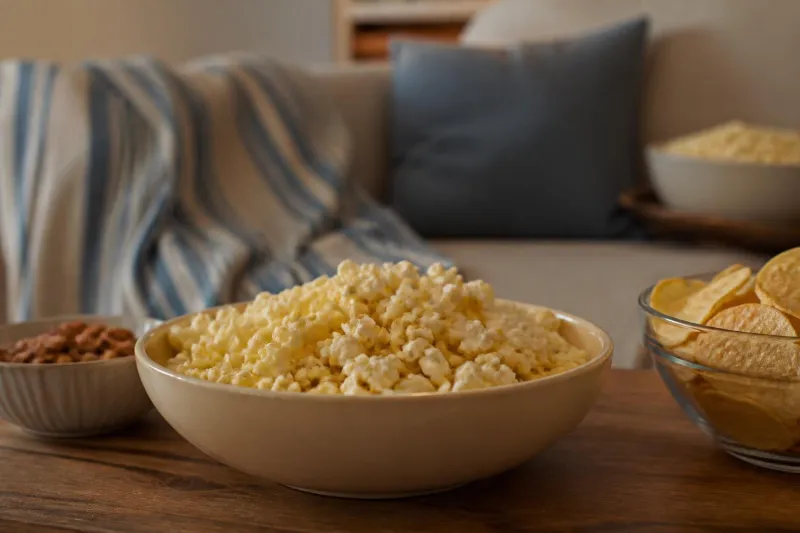
A small bag of ready salted or lightly salted popcorn may fit, especially if it is sold as a single portion. A larger sharing bag usually will not.
A roasted chickpea or broad bean snack pack may be near 100 calories if the packet is small enough, but these products vary by oil, seasoning, and weight.
A cheese portion with a few cherry tomatoes may come out around this range, depending on the size of the cheese portion.
Two plain rice cakes with a topping might be around 100 calories, but the topping will often make the difference between below and above.
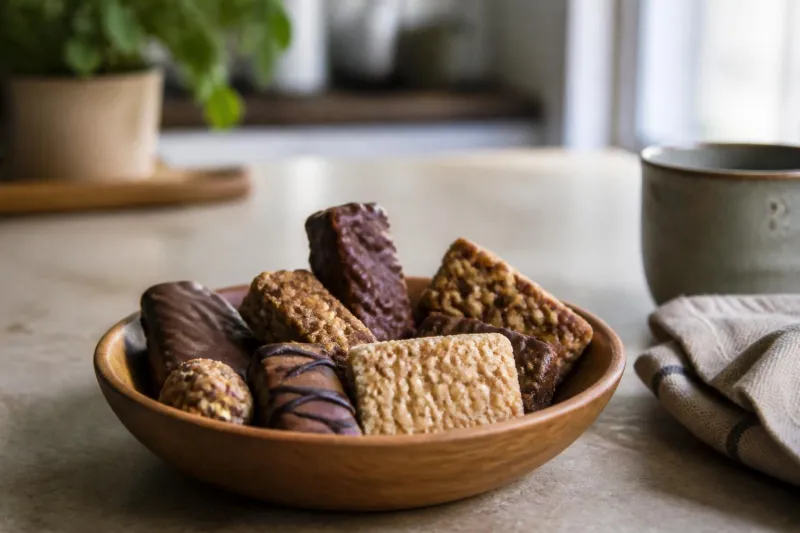
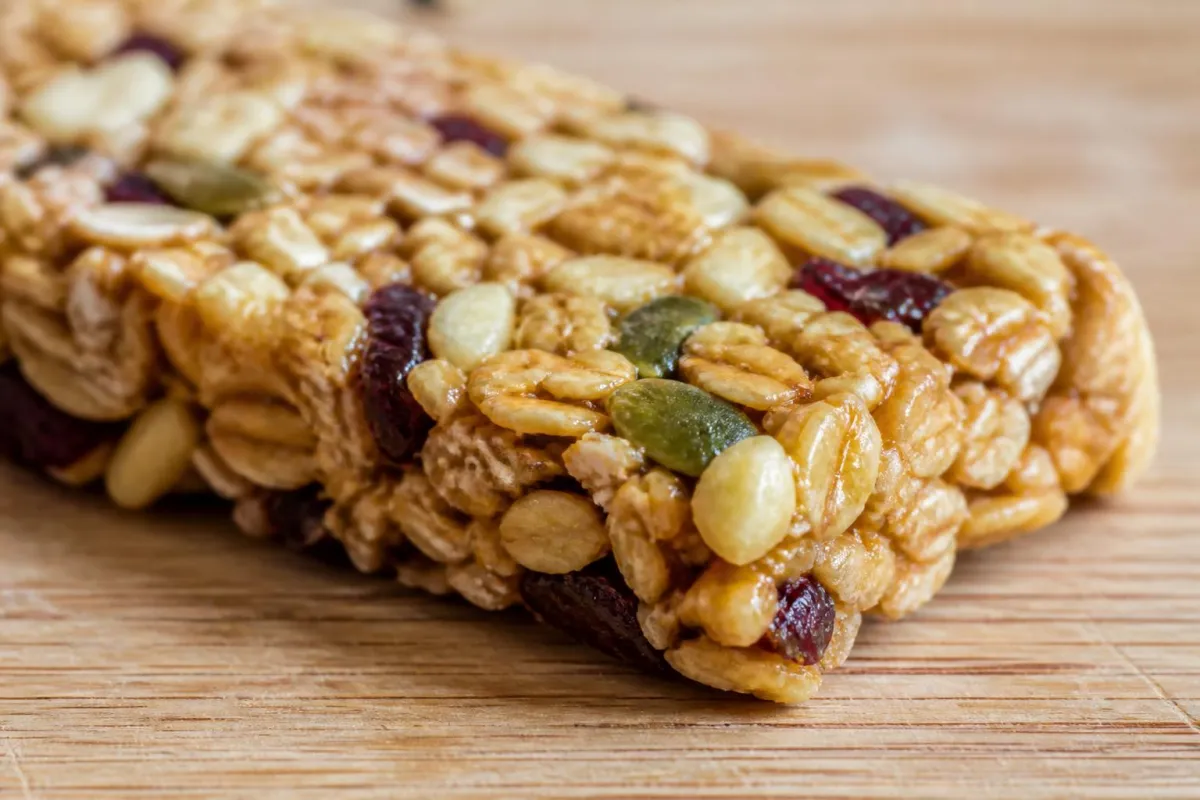
A small cereal bar may come in near 100 calories, but there is wide variation across bars that look similar on shelf.
A boiled egg with a piece of fruit may be around that zone depending on the fruit.
A small pot of cottage cheese with cucumber sticks may also land near it.
These are examples, not promises. A label may surprise you in either direction. A snack marketed as light may be more substantial than expected because the packet is bigger. A food that looks rich per 100g may come to about 100 calories because the portion is genuinely small.
For work bags, cars, and train journeys, it can also help to think about storage and clarity of labelling, not just calories. Our article on shelf-stable snacks that travel well and read clearly on labels looks at that side of the decision. If a snack needs chilling, follow the storage instructions on pack, and use sensible food handling rather than guessing Food Standards Agency food storage guidance.
When the 100-calorie idea is useful and when it is not
This idea is useful when you want a simple filter. It can make snack planning less chaotic if you are stocking a desk drawer, building a travel routine, or choosing a few options for the house that are easy to compare. It can also help when different products look similar and you want a quick first pass before reading the rest of the nutrition panel.
It can be especially practical for packaged snacks where the whole item is one clear portion. In that case, the number is easier to use because there is less maths and less room for self-deception about what counts as one serving.
It becomes less useful when it turns into a rigid rule. If you find yourself ignoring hunger, splitting obviously single eating occasions into arbitrary fragments, or treating 101 calories as meaningfully different from 99, the organising tool has stopped being practical. The same applies if the number distracts you from the bigger picture, such as whether the snack is satisfying, whether it fits your day, and whether you actually enjoy eating it.
It can also mislead when foods are very different in density. A small amount of nuts, cheese, or peanut butter can reach 100 calories quickly. A much larger amount of cucumber or berries may not. That does not mean one is better. It means calories alone do not describe volume, texture, convenience, or what role the snack plays.
For some people, a rough calorie bracket helps reduce decision fatigue. For others, it creates unnecessary mental admin. If the latter sounds familiar, a broader approach may be more useful, such as keeping a mix of fruit, higher-fibre options, protein-containing options, and a few shelf-stable packets you understand well from the label.
That is the approach we favour at Healthy Snacking. Use 100 calories as a rough marker if it genuinely helps you compare and organise. Drop it if it makes ordinary eating more confusing than it needs to be. The label is there to inform your decision, not to run it.