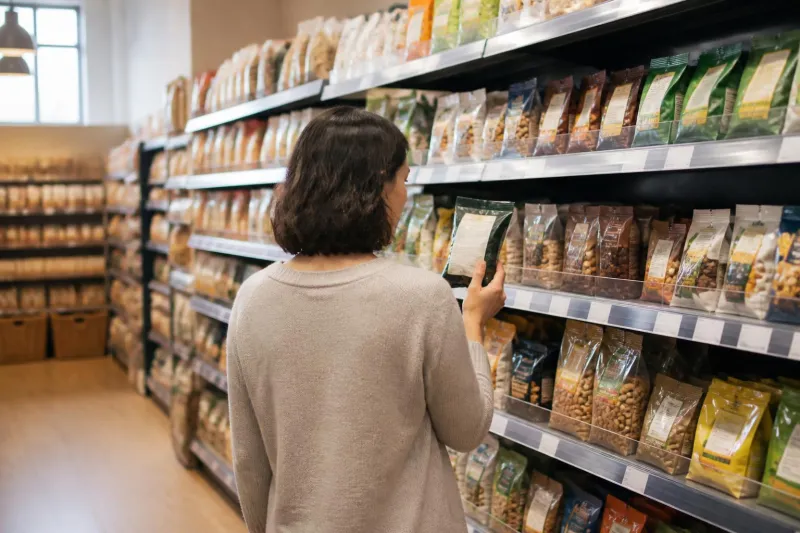
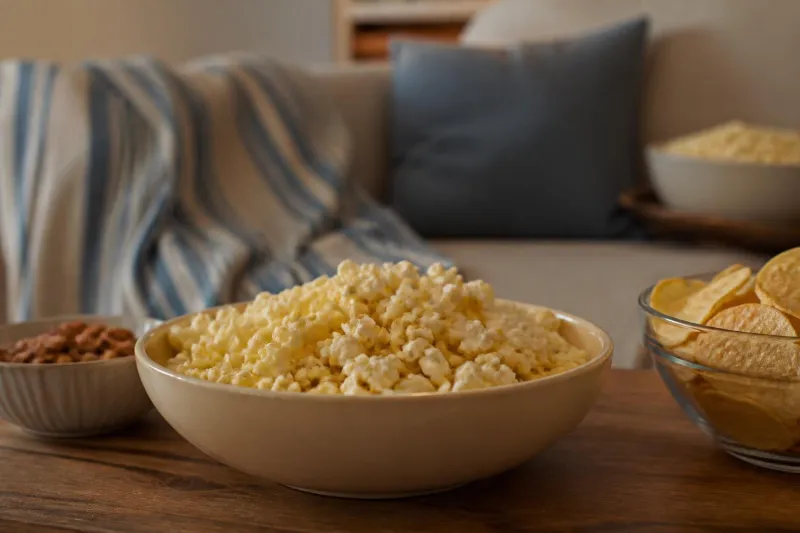
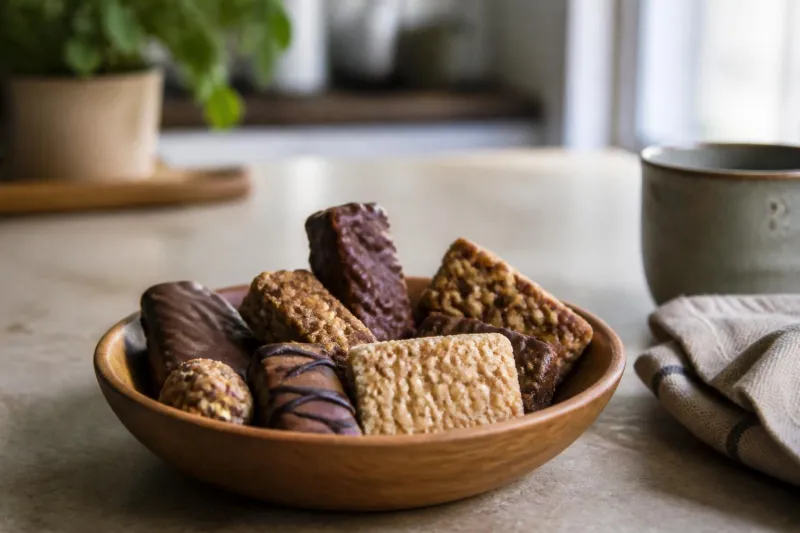
Study snacks that are easier to compare on the label
Compare like with like: per 100g and per serving answer different questions.
On this page
- What makes a snack practical for an adult study session
- When per 100g helps and when per serving helps
- Four common study-snack formats compared
- Fruit
- Yoghurt pots
- Crackers and oat-based snacks
- Nuts and seeds
- How to match the snack to the study setting
- Claims and shortcuts that are easy to overread
- A simple label-check routine before you pack your bag
For an adult study session, the most practical snack is usually the one you can compare clearly on the label, carry without fuss, and eat without interrupting what you are doing. That sounds obvious, but it rules out quite a lot. A snack can look convenient in the cupboard and still be awkward once you factor in crumb mess, refrigeration, packet size, or a label that only makes sense if you already know what the maker means by a “serving”.
At Healthy Snacking, our starting point is simple. Compare like with like, check what the packet actually says, and match the food to the setting rather than chasing a perfect option. For many adults, that means choosing study snacks that are easy to read, easy to store, and realistic for a desk, a library table, a train seat, or a shared workplace kitchen.
What makes a snack practical for an adult study session
A practical study snack is not just about what is in it. It is also about how easy it is to manage while you are trying to concentrate. We find five criteria matter most.
First, label clarity. If you are comparing two options, you need to know whether the nutrition panel is showing values per 100g or per serving. The NHS explains that these are different comparison bases, and both can be useful if you understand what you are looking at NHS food labels. For quick comparisons across categories, per 100g is often the cleaner starting point.
Second, portability. Some foods travel well in a bag for hours. Others need to stay chilled, stay upright, or be eaten soon after opening. If you are packing for an evening class or a long day between work and study, portability can matter more than the idealised version of the snack at home.
Third, mess. Crumbs, sticky fingers, strong smells, noisy wrappers and loose pieces all affect whether a snack works in practice. A food can be perfectly reasonable nutritionally and still be a poor fit for a library or open-plan office.
Fourth, storage. Refrigerated foods can be useful at home or if you have access to a fridge, but less so if the snack will sit in a backpack all afternoon. The Food Standards Agency advises following storage instructions and keeping chilled foods appropriately cold Food Standards Agency food storage guidance. In the UK, this is the practical point to watch, rather than assuming a food is fine because it is sealed.
Fifth, session length. A short revision block at home is different from a three-hour evening lecture with a commute on each side. One small item may be enough for the former and inconvenient for the latter if it leaves you hunting for a second snack half an hour later. That is not a reason to moralise about the food, only to be realistic about timing.
When per 100g helps and when per serving helps
If you want to compare study snacks properly, start by deciding what question you are asking.
If the question is, “Which of these foods is generally higher or lower in fat, sugar, fibre or salt?”, per 100g is usually the better basis. It lets you compare yoghurt with yoghurt, crackers with crackers, or nuts with seeds on a standard unit. This is why per 100g is so useful on UK labels. It removes some of the distortion created by different packet sizes and different serving claims.
If the question is, “What will I actually eat in this session?”, per serving can be useful, but only if the serving is realistic. That is where labels can become slippery. A manufacturer’s serving size may be half a pack, a small handful, or an amount many adults would not naturally measure out. The NHS makes this distinction clearly, and it is worth keeping in mind whenever a front-of-pack claim sounds simpler than the back-of-pack numbers NHS food labels.
A common problem is comparing one single-serve item with one multi-serve pack as if the labels mean the same thing. A yoghurt pot may present values for the whole pot. A bag of crackers may present values per serving, even though the bag contains several servings and many people will not count them out. If you compare the pot’s whole-pack figures with the crackers’ per serving figures, you are not comparing like with like.
This matters especially for snacks for an adult study session, because “study snack” is not a regulated category. It can mean fruit, a pot of yoghurt, a cereal bar, oatcakes, a bag of nuts, or something else entirely. The wider the category, the more careful you need to be with units.
Packet size can mislead in the other direction too. A food may look modest because the pack is small, but be dense enough that the per 100g values are still worth checking. Another food may look substantial but contain a lot of water, making the per 100g figures appear lower. Neither label is wrong. They are just answering different questions.
When in doubt, use both. Start with per 100g to compare the food type, then check per serving or per pack to see how that lines up with what you are likely to eat. If you want a separate walkthrough of this label habit, our guide on how to choose 100-calorie snacks without label confusion covers the mechanics without turning every snack decision into a maths exercise.
Four common study-snack formats compared
Rather than ranking foods, it is more useful to compare formats. The same broad type of snack can be easy or awkward depending on packaging, storage and label design.
Fruit
Whole fruit is often straightforward in practical terms. A banana, apple, satsuma or pear does not need a nutrition panel to tell you it is fruit, but packaged fruit products are more variable. Prepared fruit pots, dried fruit, fruit pouches and fruit bars all come with different label bases and different storage needs.
For convenience, whole fruit is portable and usually quiet to eat, though some fruits bruise easily and some create peel or cores that need bin access. For label reading, plain loose fruit does not invite much comparison because there is no packet in front of you. Packaged fruit products do, and that is where confusion can creep in. Dried fruit in particular can look comparable to fresh fruit if you ignore the unit basis, when in practice the water content is very different.
The practical trade-off is that fruit is often low-mess and easy to bring from home, but not always the easiest category to compare if you move from whole fruit to processed fruit snacks.
Yoghurt pots
Yoghurt pots can be neat at a home desk and easy to portion because the container itself often defines the amount. That makes per serving or per pot information fairly usable, provided the whole pot is what the label means. They can also be less crumbly than dry snacks.
The downside is storage. Unless the product is specifically shelf-stable, it usually needs refrigeration, and that limits where it works. It is less practical for a long commute, a warm classroom, or a day when you do not have access to a fridge. It can also be awkward in a library if you need a spoon and a bin.
Label reading on yoghurt can be clearer than on some multi-pack snacks, but added ingredients matter. Fruit layers, granola toppers and dessert-style formats change the comparison. If you are comparing two pots, check whether the figures are for the plain yoghurt only or the combined product.
Crackers and oat-based snacks
Crackers, oatcakes and similar dry snacks are common desk foods because they are shelf-stable and easy to keep in a drawer or bag. They work well for portability and storage, and they are often simple to portion out if the pack has clear counts or if individual packs are used.
Their weak point is mess. Crumbs are the obvious issue, but there is also wrapper noise and, with some products, dry mouth if you are eating while reading or typing. In a shared quiet setting, that can matter more than many people expect.
For labels, this format often creates per serving confusion. A box may define a serving as a certain number of crackers, while the actual amount eaten can vary a lot. Per 100g is often the better first comparison. If you want a related example outside the study setting, our guide to compare savoury lunch snacks without label mix-ups shows the same unit problem in another everyday context.
Nuts and seeds
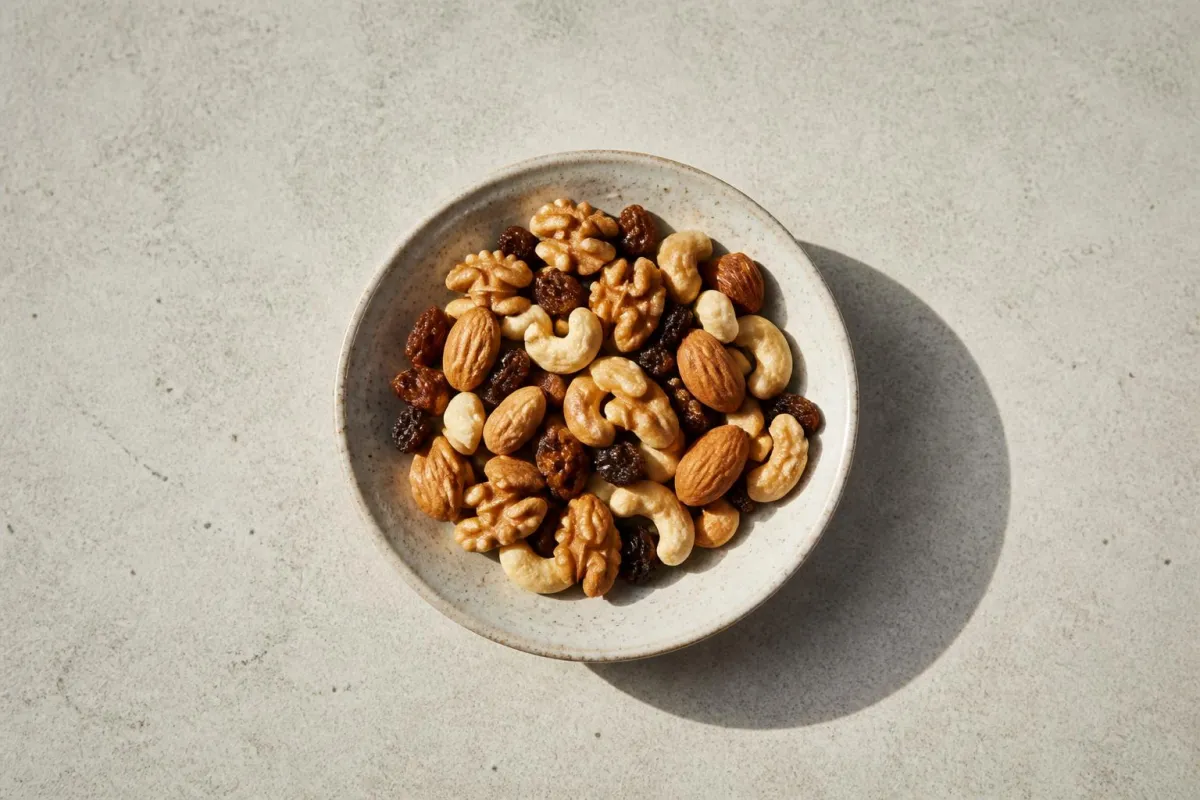
Nuts and seeds are compact, shelf-stable and easy to carry. They suit long sessions because a small amount can be practical to pack, and they usually create less crumb mess than crackers. They can, however, be noisy if they come in rustly packets, and loose seeds are not ideal over keyboards.
Label reading is mixed. Per 100g is useful for comparing one nut or seed product with another, but less useful if you forget how concentrated the food is by weight. Per serving can help, but only when the serving is genuinely clear. Multi-serve bags are where people often lose track of what they are comparing.
There is also an allergy point. A general article cannot tell anyone that a nut or seed product is suitable for them personally. The Food Standards Agency advises consumers to check ingredient lists and allergen information carefully Food Standards Agency consumer allergy guidance. That applies just as much to flavoured mixes and snack bars as to plain nuts.
We have covered the wider context in nuts in an overall eating pattern, which is a better place for that discussion than this study-focused comparison.
How to match the snack to the study setting
The best snack at a home desk is not always the best one in a library or on a train.
At home, refrigeration is usually the easiest variable to manage. That opens the door to yoghurt pots, cut fruit, leftovers in a small container, or other chilled options. Spillage still matters if you are working near electronics, but home is the setting where you can usually choose comfort over maximum portability.
In libraries, noise and mess become more important. Crinkly packets, crunchy foods and anything requiring cutlery can be disruptive. Dry snacks that shed crumbs across a shared table are not ideal. Whole fruit can work well if it is quiet and tidy, but something strongly scented or awkward to peel in a silent room may not.
In workplaces, the issue is often storage and social practicality. You may have a fridge, but you may also have limited desk space, shared bins and meetings that interrupt when you planned to eat. A snack that can be resealed or eaten in stages may be easier than one that needs immediate attention once opened.
For travel, shelf stability and spill risk move to the top of the list. A pot that is perfectly manageable at home may be irritating on a crowded train. Foods that stay intact in a bag and do not require refrigeration are often the simplest choice. If that is your main use case, our guide to shelf-stable snacks that travel well and read clearly on labels goes into that format in more detail.
The Food Standards Agency’s storage guidance is the useful baseline here. Follow the storage instructions on the pack, especially for chilled foods, rather than assuming that an insulated bag or a cool day solves the issue Food Standards Agency food storage guidance.
Claims and shortcuts that are easy to overread
Front-of-pack wording can save time, but it can also encourage over-reading.
Take no added sugar. This claim tells you something specific about formulation. It does not tell you everything about the food, and it does not make two products automatically equivalent. A product labelled no added sugar may still contain sugars naturally present in ingredients such as fruit or milk. It also says nothing by itself about fibre, salt, texture, portion size or whether the food is practical for your study setting.
That is why we treat these claims as starting points, not conclusions. If you want a label-focused explanation of the claim itself, see our guide on how to compare no added sugar snacks without guesswork.
The same caution applies to broader assumptions about what a single snack should achieve. The NHS Eatwell Guide is about dietary balance over a day or week, not about demanding that every individual snack carry the full burden of a balanced diet NHS Eatwell Guide. Our interpretation is practical: if a snack works for the moment, reads clearly on the label, and fits into your wider eating pattern, that is usually a more useful standard than expecting one item to do everything.
Where UK practice differs from the EU more generally, the main point for everyday shoppers is not that labels are unreadable across borders, but that presentation and terminology can vary by market and pack format. In the UK, nutrition information per 100g or per 100ml remains a standard comparison tool. Imported products may present information differently or foreground different serving assumptions, so the same caution still applies.
A simple label-check routine before you pack your bag
Before you leave for work, class or a study session, a short routine is usually enough.
Check the setting first. Will you have refrigeration, a spoon, bin access, a stable surface, and the freedom to eat something noisy or crumbly? If not, rule out anything that depends on those conditions.
Check the label basis next. Are you looking at per 100g, per serving, or the whole pack? If it is per serving, how many servings are actually in the packet, and is that serving size realistic for you?
Check storage instructions. If the food is chilled, can you keep it chilled for the time you need? Follow the packet instructions and the Food Standards Agency guidance on proper chilling and storage Food Standards Agency food storage guidance.
Check the ingredient list and allergen information if relevant to you or anyone sharing the food. Do not rely on category assumptions such as “it looks plain” or “it was fine last time”. The Food Standards Agency’s consumer advice is the right baseline here Food Standards Agency consumer allergy guidance.
Then check practicality. Will it leak, crumble, melt, bruise, or leave you juggling packaging on public transport? That question is not secondary. It is often the reason a theoretically good option stays untouched at the bottom of the bag.
If you want a broader framework for reading snack labels without duplicating the same comparisons in every article, our everyday snack guidance and our corrections and evidence notes explain how we approach label interpretation and where uncertainty remains. That is more useful than pretending there is one perfect snack for every adult study session.
The practical answer is usually simpler. Pick something you can compare clearly, store properly, and eat where you are actually going to be. That tends to make better study snacks than any amount of packaging hype.